As an Amazon Associate, we earn from qualifying purchases. Some links on this site are affiliate links at no extra cost to you. Our recommendations are based on thorough research and editorial judgment.


Heated Blanket Safety: Is All Night Use Safe

Heated blankets are equipped with technology that allows for safe usage, including features like automatic shut-off after roughly 10 hours and continuous temperature monitoring. However, overnight use can pose risks, such as burns from bunched fabric and elevated body temperature disrupting sleep cycles. Users should verify blankets are less than 10 years old, properly dry, and adhere to safety instructions. Awareness of these aspects improves safety. Additional insights on choosing and maintaining heated blankets can be beneficial.
Key Takeaways
- Prolonged use of heated blankets can lead to elevated body temperature, disrupting natural sleep cycles.
- Sensitive individuals face a higher risk of burns if blankets are bunched or folded during use.
- High-quality heated blankets feature safety features like automatic shut-off to reduce fire risks when used overnight.
- Regular inspections of cords and blankets are crucial to prevent electrical hazards and potential injury.
- Consult healthcare providers if you have specific health concerns related to heated blanket usage, especially for vulnerable populations.
Understanding Modern Heated Blanket Technology
You may be interested



When exploring modern heated blanket technology, it becomes evident that these blankets incorporate sophisticated systems designed for both comfort and safety. Key heating technology advancements include insulated conductive wires strategically embedded in the fabric, allowing for even heat distribution. The electric current passing through these wires generates warmth, with surface temperatures peaking at 194°F (90°C) briefly before stabilizing below 149°F (65°C) for safe use. Blanket material innovations enhance user experience, utilizing soft fabrics like fleece and sherpa that retain heat effectively. Adjustability is another hallmark, with many models featuring customizable heat settings and dual-zone controls. Additionally, integrated thermostats monitor temperatures, maintaining consistent warmth while preventing overheating, contributing to energy efficiency and enhanced user satisfaction across various conditions. Furthermore, safety features such as automatic shut-off ensure protection during prolonged use.
Key Safety Features to Look For

Understanding key safety features is vital for anyone considering a heated blanket. An automatic shut off system is essential, as it turns the blanket off after a preset duration, commonly 10 hours, to reduce fire hazards. Additionally, temperature control mechanisms offer adjustable heat settings, often allowing up to 10 distinct levels. These features guarantee personalized warmth while mitigating the risk of excessive heat exposure. Overheat protection utilizes embedded sensors to continuously monitor surface temperatures, automatically adjusting or shutting down when safety thresholds are exceeded. High-quality blankets boast certifications like UL or ETL, assuring compliance with strict safety standards. Investing in models with these features provides peace of mind, enabling safe and cozy use during sleep or extended periods. For example, blankets with auto shut-off timers enhance safety by preventing overheating during long nights.
Recommended Products

Medium cabinet - 7.1 cu ft capacity, holds 25 blankets. Outside dimensions - 22"l x 29"w x 40"h. Inside dimensions - 19"l x 25"w x 26"h. 4 " swivel caster wheels.

【UPGRADED RED LIGHT THERAPY DEVICE】INTEO red light therapy mat has 2570 Lights with each having 2 chips corresponding to different wavelength combinations. 660nm red light (visible light) it can solve skin problems, 850nm near-infrared light (invisible light) it targets deep muscles and joints, muscle relaxation and better concentrating the light source and doubling the effect

100% EMF-Free & Non-Electric Safety:Engineered with a water pipe + hot water circulation system (NO electric wires inside the pad), this water-heated mattress pad delivers 100% EMF-free safety—eliminating all risks of electric leakage, short-circuit fires, and electromagnetic field exposure. With 100% water and electricity separation, it is the safest choice for the whole family—perfect for the elderly, children, and pregnant women who prioritize long-term health and safety.
Risks Associated With Overnight Use

Heated blankets, while popular for providing warmth, come with several risks when used overnight. Prolonged use can lead to elevated body temperature, resulting in overheating consequences that disrupt natural sleep cycles. This can cause restlessness and excessive sweating, further compromising hydration levels. The risk of burn increases when blankets are bunched or folded, concentrating heat and creating localized burn risks—particularly for vulnerable populations like children and the elderly. Extended use of high heat settings raises the potential for thermal injury, especially for individuals with diminished sensation. Additionally, aged or damaged electric blankets heighten electrical hazards, amplifying both burn risks and fire dangers, as older models are primarily responsible for most heating-related fires annually. Furthermore, following safety features in electric blankets can help mitigate these risks.
Essential Precautions for Safe Use
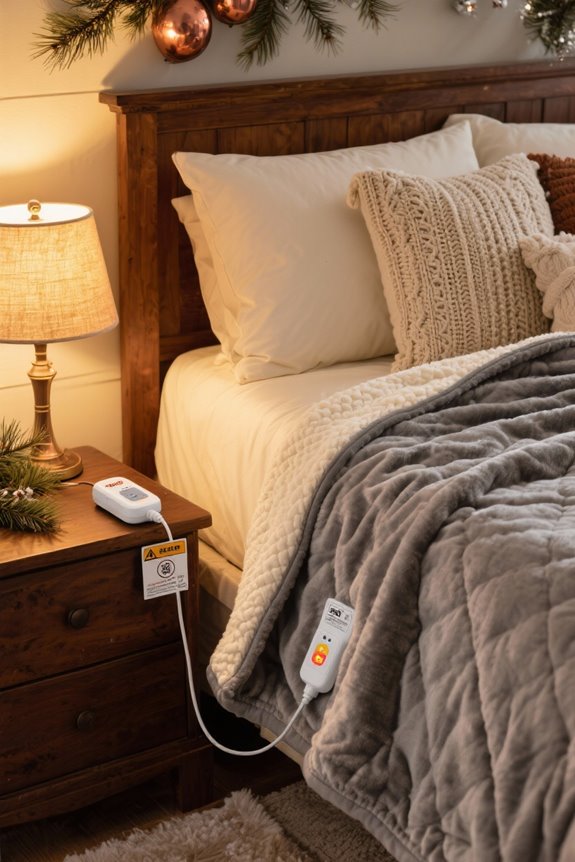
Ensuring the safe use of electric blankets requires adherence to several essential precautions, especially given their widespread appeal for warmth during colder seasons. Users should follow user guidelines, opting for blankets less than 10 years old, equipped with automatic shutoff features and recognized safety certifications. Blankets should remain flat during use, avoiding folding or bunching to prevent heat buildup. Heavy objects should not rest on them, as this may damage internal wiring. Furthermore, users should avoid simultaneous use with other heating devices to reduce risks. Regularly inspecting cords and plugs for wear, and ensuring the blanket is dry before use, enhances user safety. Additionally, vulnerable populations should be closely monitored if electric blankets are utilized. It’s also important to choose blankets with safety features such as ETL certification and low electromagnetic radiation levels to further ensure peace of mind while using them.
Recommended Products

Safely heats cylinder to an optimal 90 ° F / 32 °C (± 10 °F/5 °C)

Safely heats cylinder to an optimal 90 ° F / 32 °C (± 10 °F/5 °C)

Oversized design: This towel warmer is made of 304 stainless steel, easy to clean, and has excellent rust & corrosion resistance. It was designed with groups of bars to increase heat density with a larger heated area to meet the needs of the whole family.
How to Check the Integrity of Your Blanket

Checking the integrity of an electric blanket is vital for guaranteeing its safe operation and prolonged use. Regular safety inspections include visual checks for tears, fraying cords, or burn marks on plugs. Users should power on the blanket and listen for unusual noises while feeling for cold spots that indicate heating element issues. Functional testing methods, such as laying the blanket flat for even heat distribution, are also important. Employing a multimeter for electrical diagnostics can reveal broken circuits, with specified resistance ranges found in the manufacturer’s manual. Following established guidelines, such as AS/NZS 3760, guarantees thorough assessments. Additionally, choosing blankets with overheat protection can enhance safety by preventing potential hazards. Documenting results and scheduling periodic evaluations maintain safety and reliability, contributing to the blanket’s overall performance and user safety.
Health Considerations for Electric Blanket Users
Are electric blankets safe for all users, particularly those with health concerns? Health risks associated with electric blanket usage are varied across user demographics. While studies indicate no direct link to cancer or significant risks for most healthy individuals, certain populations require caution. Pregnant individuals are often advised against using electric blankets due to theoretical risks from non-ionizing radiation. Additionally, users with heart conditions should consult healthcare providers due to potential cardiovascular effects. Older adults and people with neurological conditions may experience increased burn risks because of altered skin sensitivity. Consequently, close monitoring is advisable, particularly for vulnerable users, to guarantee safe and proper usage of electric blankets while minimizing potential health impacts. It’s also essential to consider the importance of safety features such as automatic shut-off to further enhance user safety.
Best Practices for Overnight Heating
A well-planned approach to using heated blankets overnight can considerably enhance comfort while ensuring safety. Users should select ideal heat settings, such as low to moderate, to reduce the risk of overheating. Blanket layering techniques, like placing a thin sheet between the heated blanket and the user, help distribute heat evenly and minimize hot spots. It is advisable to preheat the bed at a higher setting before switching to low heat for sleep. Blankets should be spread flat, avoiding tight tucks around mattresses, as this can trap heat. Additionally, opting for heated blankets with built-in temperature controls or auto-shutoff features enhances safety and efficiency, providing peace of mind throughout the night. Regular monitoring also plays an essential role in ensuring safe usage. Choosing blankets with safety features such as automatic shut-off can further mitigate overheating risks.
Recommended Products

HIGH QUALITY MAT: Safe, comfortable and reliable. Made with the best quality materials in the industry including heavy duty industrial grade parts and durable heat resistant medical-grade mesh fabric.

HIGH QUALITY MAT: Safe, comfortable and reliable. Made with the best quality materials in the industry including heavy duty industrial grade parts and durable heat resistant medical-grade mesh fabric.
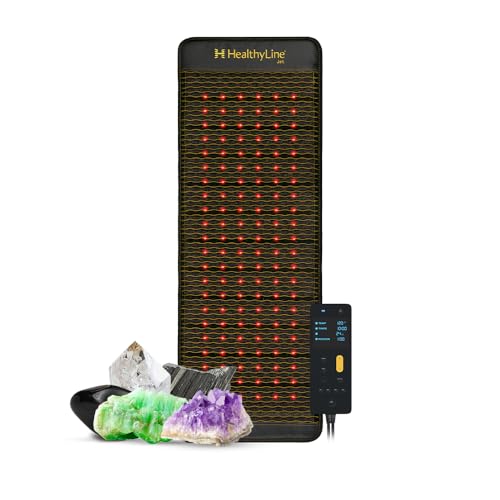
INSTANT SPA-LIKE RELAXATION - Transform any place into a personal spa sanctuary. Leave traditional electric heating pads behind as our holistic approach provides far infrared heat that penetrates 3 to 6 inches beneath the surface for pain relief, coupled with the calming benefits of negative ion therapy. This powerful combination promotes relaxation, enhances blood circulation, and delivers comprehensive pain management and overall wellness
Electrical and Fire Safety Guidelines
The safe use of electric blankets requires adherence to specific electrical and fire safety guidelines that guarantee both efficiency and protection. Regular safety inspections are vital; users should examine cords and plugs for any signs of damage. Proper cord management is essential; avoid plugging blankets into extension cords or power strips, as overloading outlets may increase fire risks. Additionally, never lay on top of an electric blanket or pile it with blankets and toys, as this can cause dangerous heat build-up. Users must also verify that electric blankets are dry, avoiding use while damp, to prevent electrical shock. If overheating or smoke is detected, immediately unplug the device to mitigate fire hazards and maintain continued safety. It is also important to choose blankets with safety certifications, which confirm compliance with necessary safety standards and reduce electrical hazards.
Recommended Products

Multiple Cycles: Dry your laundry at home with this Black and Decker laundry machine. Our clothes dryer has 16 cycle selections to choose from for a variety of clothes and needs

Quickly heats to a preset 100º F | 38º C (+ - 10º F/3º C)
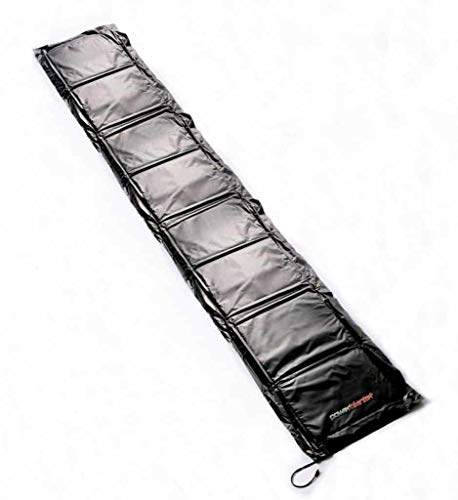
Quickly heats to a preset 100º F | 38º C (+ - 10º F/3º C)
Choosing the Right Heated Blanket
Selecting the right heated blanket involves careful consideration of various factors to guarantee comfort, safety, and suitability. Consumers should explore various fabric options, such as ultra-soft Sherpa, Microplush, and fleece, which enhance comfort and thermal retention. The blanket’s breathability and heat distribution are influenced by material choices. Size variations also play an essential role; options range from twin, queen, and king sizes to throw blankets for portable use. Additionally, energy-efficient, low-voltage models provide multiple heat settings, often ranging from 93°F to 158°F. Some blankets even feature dual controllers for personalized comfort or zoned heating to prevent overheating specific areas. These considerations make certain that users select a heated blanket that meets their unique needs while maintaining safety and efficiency. Furthermore, looking for blankets with safety certifications can further enhance peace of mind during use.
Recommended Products

High quality, luxury A kotatsu with high-quality and luxury wood grain design. You can use it as a kotatsu in cold season, and remove the kotatsu cover and you can use this as a coffee table when in warm season.

Safe Design & Unmatched Durability:Engineered with low-voltage DC 24V for 100% EMF-free safety, our Hepta Core Heat Wire Structure features 7 stranded carbon heating wires—far more durable than single-wire designs, preventing breakage and ensuring years of reliable use. No risk of overheating, electric shock, or fire, making it ideal for families, pregnant users, and sensitive sleepers.
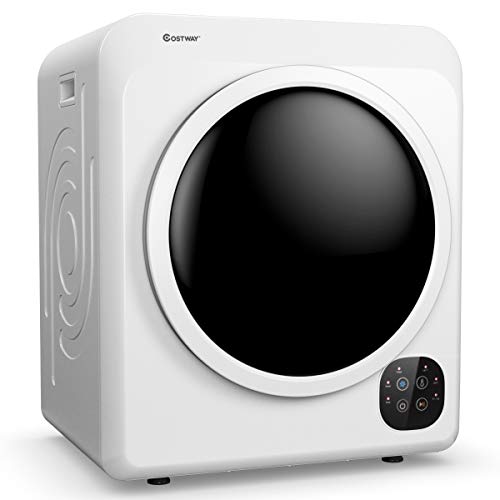
[Large Capacity Front Load Dryer]COSTWAY electric clothes dryer features a spacious 3.22 cubic feet capacity and dries up to 13.2lbs of clothing, almost meets the drying needs of the whole family. Equipped with powerful 120v/60Hz motor unit and PTC heat element, the inner drum will rapidly form the warm air flow to provide stable drying performance in low noise.【This product is not sold in California.】
Responding to Recalls and Safety Updates
How should consumers respond when heated blankets face recalls or safety updates? In cases of recall notifications, consumers must immediately stop using the affected blanket and unplug it to avoid potential hazards. They should verify the product model, size, and purchase details against recall information available on the U.S. Consumer Product Safety Commission (CPSC) website. Following identification, it is crucial to contact the retailer or manufacturer for instructions on obtaining a refund, replacement, or repair. Consumers must also dispose of recalled items safely and responsibly, avoiding resale or donation. Staying informed by frequently checking CPSC updates guarantees ongoing product safety. This proactive approach is important, especially given that millions of households use heated blankets, some of which have been linked to serious safety risks. Additionally, many blankets feature auto shut-off technology which enhances safety during overnight use.
Frequently Asked Questions
Can I Use a Heated Blanket on a Waterbed?
Using a heated blanket on a waterbed is not recommended due to compatibility issues. Blanket features may lead to overheating, unpredictable heat distribution, and increased fire risks, making it unsafe for prolonged use.
Do Heated Blankets Emit Harmful Electromagnetic Fields (EMF)?
Heated blankets, ironically designed for comfort, do emit some electromagnetic exposure. However, adhering to safety guidelines reveals that the overall risks linked to these emissions remain inconclusive, suggesting little cause for alarm when used appropriately.
How Should I Store My Heated Blanket?
To store a heated blanket safely, employ proper folding techniques, avoiding tight creases. Choose a cool, dry environment for storage, ensuring good air circulation to prevent moisture buildup that can lead to mold and damage.
Are Heated Blankets Safe for Children?
Heated blankets pose safety risks for children due to their vulnerability to overheating. Child supervision is essential to guarantee heating safety, particularly for younger children and those with reduced temperature sensitivity. Always inspect blankets before use.
What Should I Do if My Blanket Smells Burning?
When Clara noticed a burning smell from her heated blanket, she immediately unplugged it and inspected for damage. Safety tips include not using it again until professionally checked, especially if the odor persists or intensifies.


