As an Amazon Associate, we earn from qualifying purchases. Some links on this site are affiliate links at no extra cost to you. Our recommendations are based on thorough research and editorial judgment.


How To Remove Odors From An Electric Throw

To remove odors from an electric throw, it is essential to unplug the device and check for visible damage. For cleaning, vacuum the surface and apply baking soda for odor absorption. If washable, use a diluted vinegar solution and mild detergent in cold water, pre-soaking for 15 minutes. Avoid excess moisture to protect electrical components. Regular inspections help prevent future odors. Further insights into effective maintenance techniques can enhance your cleaning strategy.
Key Takeaways
- Identify the odor source, such as urine or smoke, to determine the best cleaning approach for your electric throw.
- Sprinkle baking soda on the fabric, let it sit overnight, then vacuum to absorb and neutralize odors.
- Use a diluted vinegar solution (1 part vinegar to 2 parts water) for tough odors by spraying or rinsing the fabric lightly.
- For non-washable throws, spot clean with minimal moisture and a gentle detergent to prevent damage to electrical components.
- Pre-soak in lukewarm water with mild detergent for 15-20 minutes before washing, ensuring the power cord is detached first.
Safety Precautions Before Cleaning
You may be interested


Before initiating the cleaning process of an electric throw, what important safety measures should be observed? A thorough safety checklist is essential to guarantee proper handling. First, the electric throw must be completely unplugged from its power source to prevent electric shock. Next, detach all electrical components, including the control cord, to avoid damage during cleaning. Inspect the throw for visible wear, fraying, or damaged wiring. If any is found, do not proceed with cleaning, as this poses a short-circuit risk. Adhering strictly to the manufacturer’s cleaning protocol is vital; use only mild detergents and cold water. Finally, confirm the throw is completely dry before reconnecting to safeguard against electrical hazards. Prioritizing these steps fosters a safer cleaning experience. Additionally, ensure that the throw’s safety features, such as overheat protection, are functioning properly to enhance safety during use.
Initial Cleanup Steps

To effectively initiate the cleanup of an electric throw, a thorough inspection is essential. First, confirm the throw is completely unplugged to prioritize safety. Conduct a fabric inspection, looking for visible damage to the wiring or fabric, particularly near areas where odors are noticeable. Identifying the source of the odor—whether it’s from urine, smoke, or another substance—is vital for tailoring the subsequent cleaning approach. It’s advisable to check the manufacturer’s care instructions to understand specific guidelines regarding cleaning and moisture exposure. Avoid saturation to prevent damage to electrical components. Finally, using a dry, absorbent cloth to blot any wet areas can begin the process of odor removal without pushing substances deeper into the fabric. Additionally, consider incorporating safety features such as tip-over protection and overheat protection to ensure the heater’s safe operation during the cleaning process.
Blotting Techniques for Wet Areas

Utilizing effective blotting techniques is essential for managing wet areas on an electric throw, as immediate action can greatly enhance moisture removal and odor reduction. To begin, place absorbent materials both above and below the textile, applying slight pressure to maximize liquid absorption. Dabbing motions are ideal; they allow for effective moisture uptake without spreading the stain. Additionally, rolling the textile with absorbent materials on top increases surface contact. It is vital to replace wet absorbent materials frequently with dry ones until no excess moisture is detected. Rotating blotting cloths can also improve effectiveness. Finally, after initial blotting, applying a gentle detergent solution and continuing to blot will assist in removing any lingering odors from the electric throw. Incorporating regular maintenance practices, akin to those used for permanent filter air purifiers, can further enhance the longevity and freshness of your electric throw.
Dealing With Dry Stains

Dry stains on an electric throw require careful handling to prevent further damage while effectively removing the residue. First, gently brush off any loose debris that may be present. Next, for best results, use a damp cloth to spot clean the affected area. Applying a mild stain remover that is compatible with the specific fabric types of the throw will also aid in stain removal. It is essential to avoid rubbing the stains, as this can harm the fabric and wiring. After treatment, allow the area to air dry completely. This method guarantees the integrity of the electric components, maintaining both functionality and appearance over time. Regular maintenance, including machine washable options, will prolong the life of the electric throw.
Importance of Avoiding Excess Moisture
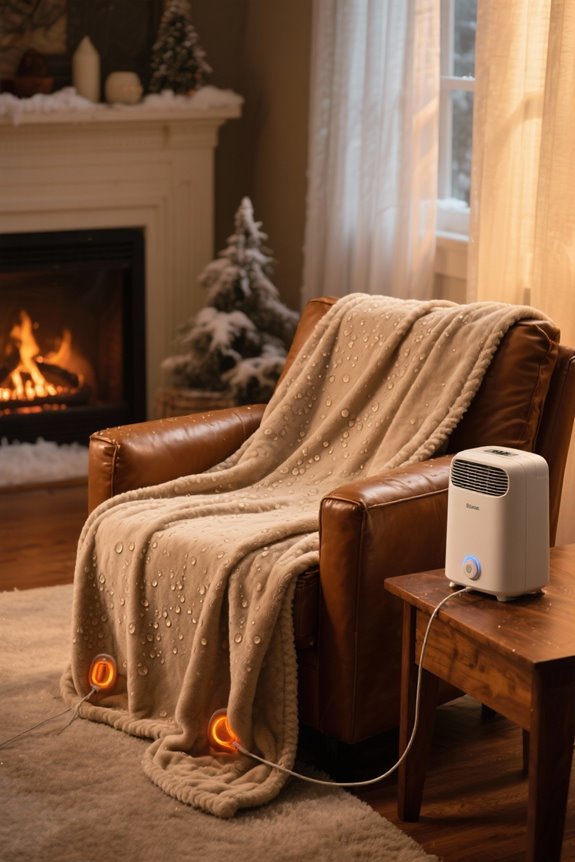
When considering the use of an electric throw, acknowledging the significance of avoiding excess moisture is essential for ensuring both safety and durability. Excess moisture can lead to corrosion of internal wiring, greatly increasing moisture risks and the potential for malfunction. A wet electric throw poses a serious electric shock hazard, as water facilitates electricity’s flow. Additionally, moisture can cause short circuits, resulting in overheating or fires, making complete drying before use crucial for user safety. To prevent damage, electric throws should be stored in dry, well-ventilated areas and inspected regularly for dampness. Proper drying, such as utilizing low-temperature dryer cycles, helps preserve the integrity and functionality of the throw, ultimately enhancing its lifespan and user experience. Regular maintenance and monitoring air quality can also contribute to a safer environment when using electric throws.
Odor Neutralization With Vinegar
Excess moisture not only poses risks to the safety and durability of an electric throw but can also lead to the development of unpleasant odors. Vinegar’s effectiveness as a deodorizer lies in its primary component, acetic acid, which engages in a chemical reaction with alkaline odor compounds. This reaction alters their molecular structure, effectively neutralizing odors like smoke or food smells. Users can enhance odor removal by placing bowls of white distilled vinegar nearby, or by spraying a diluted vinegar-water solution on the fabric. For machine-washable throws, adding vinegar to the rinse cycle improves freshness. While vinegar temporarily alleviates mild to moderate odors, strong, deeply embedded smells may require additional cleaning methods for satisfactory results. Regular treatment application with appropriate treatments can further improve indoor air quality and reduce odors.
Using Baking Soda for Odor Absorption
Baking soda is a widely recognized and effective agent for absorbing odors, especially in household textiles like electric throws. Known for its alkaline baking soda properties, it neutralizes acidic odors through a chemical reaction that releases carbon dioxide and water. Effective applications include sprinkling it generously on the throw’s surface, allowing it to rest for several hours before vacuuming off. This method capitalizes on its ability to alter odor molecules, creating less noticeable substances. For deeper odors, a paste of baking soda and water can be carefully applied, with thorough drying afterward. While baking soda effectively mitigates mild odors, it has limitations; strong or persistent scents may require additional odor control strategies to eliminate the source. Additionally, using soft fabrics like flannel in your electric throw can help minimize odors by providing a more comfortable and clean surface.
Repeating Treatments for Persistent Odors
Repeating treatments for persistent odors guarantees a thorough deodorization process. Odor management often requires multiple applications for effectively tackling stubborn smells. For instance, a diluted white vinegar solution—mixing one part vinegar with two parts water—can be lightly sprayed onto affected areas. Allow this solution to sit for 15 to 30 minutes to enhance its odor-neutralizing abilities. Following this, airing the electric throw outdoors promotes evaporation and may enhance results, especially on breezy days. In cases of organic odors, repeated enzyme-based cleaner applications can further assist in breaking down residual compounds. Regular treatments maintain the safety of the electric components while improving overall freshness, helping to achieve a cleaner and more pleasant electric throw experience. Additionally, ensuring that the electric throw is machine washable can simplify maintenance and contribute to the removal of lingering odors.
Washing Guidelines for Electric Throws
When managing the cleanliness of an electric throw, adhering to washing guidelines is essential for maintaining its functionality and safety. First, always check the manufacturer’s care label for specific instructions, as some fabric types may not be machine-washable. For those that are, use a gentle laundry cycle with cold water, applying a mild detergent without bleach. For added care against odors, pre-soaking the throw for 15 minutes is advisable. Confirm the power cord is detached before washing to prevent damage. After washing, rinse thoroughly to eliminate any detergent residue. Limit agitation during the laundry cycle to protect the internal wiring. Proper adherence to these guidelines fosters a safe and effective cleaning process for electric throws, as many heated blankets are designed to be machine washable which enhances their convenience and longevity.
Hand Washing Methods
Hand washing an electric throw requires careful attention to detail to guarantee both cleanliness and safety. First, confirm that hand washing is allowed by checking the care label, then unplug the throw and detach all electrical components. For best results, use lukewarm water (around 30°C or 86°F) with a small amount of mild laundry detergent free from bleach. Soak the throw for 15 to 20 minutes, gently agitating the fabric to loosen odors. During cleaning, avoid vigorous actions to protect wiring. Afterward, rinse thoroughly, ensuring no detergent residues remain. Gently squeeze out excess water without wringing, then hang the throw to air dry in a well-ventilated area, following these cleaning tips to maintain its integrity and longevity. Additionally, ensuring that the throw has safety features such as overheat protection is crucial for safe use after washing.
Alternative Cleaning Options for Non-Washable Models
Maintaining an electric throw that cannot be washed requires specific alternative cleaning methods to effectively eliminate odors without risking damage. Baking soda is a popular choice; sprinkle it generously over the electric throw fabrics and let it sit overnight. This allows for ideal odor absorption before vacuuming. Vinegar can also be utilized; a diluted solution of one part white vinegar to two parts water can neutralize tougher odors when lightly sprayed on affected areas. Additionally, fresh air and sunlight exposure can be immensely beneficial, as hanging the throw outdoors helps eliminate bacteria. Finally, targeted spot cleaning with minimal moisture and specialized odor-neutralizing sprays can refresh the throw while protecting its electrical components effectively.
Maintenance Tips for Odor Prevention
Odor prevention in electric throws is essential for maintaining hygiene and prolonging the device’s lifespan. Regular inspections should be conducted to identify visible stains or damage to the wiring, allowing for timely intervention. Minor spills can be addressed by blotting with a damp cloth and a gentle detergent solution, which helps prevent the odor from setting in. Using mild, bleach-free detergents is vital for fabric integrity. To enhance cleaning effectiveness, pre-soak the throw in lukewarm water with detergent for 15 to 20 minutes. Avoid fabric softeners and use air drying only, ensuring complete moisture removal to prevent mildew. Additionally, keeping the throw flat during usage can reduce overheating, which may lead to unpleasant odors.
Storage Recommendations to Avoid Musty Smells
Storing electric throws properly is vital for preventing musty odors and extending their life. Storage duration plays a significant role, so keeping throws in a cool, dry environment is important. Ideal temperatures between 50°F and 70°F inhibit mold growth. Avoid direct sunlight and heaters, as these conditions can degrade fabric and wiring. Use breathable cotton bags for storage rather than plastic, which traps moisture. Rolling the blanket loosely helps prevent internal wire damage, reducing potential odor sources. Regularly air out stored throws by unrolling them in a ventilated area. Adding desiccants, such as silica gel packs, promotes moisture control. By adhering to these recommendations, the integrity of the electric throw remains intact, minimizing the risk of musty smells.
Signs It’s Time to Replace Your Electric Throw
Electric throws can provide warmth and comfort, but recognizing the signs that indicate a need for replacement is crucial for safety and proper function. Key indicators for replacement include visible damage, such as fraying cords, exposed wires, and scorch marks on the fabric, all signaling potential electrical hazards. Frequent overheating or tripped circuit breakers are serious signs of malfunction that should not be ignored. Additionally, unusual buzzing sounds or burning odors suggest an impending electrical failure. Inconsistent heating or faults in the controllers can negatively impact performance. If any of these issues arise, it may be time to contemplate replacing the electric throw to guarantee safe and effective use in your home environment.
Frequently Asked Questions
Can I Use Scented Fabric Sprays on My Electric Throw?
Using scented fabric sprays on an electric throw may seem like a fragrant dream, but caution prevails. Electric throw care requires diligence; avoid sprays that could ruin fabrics or harm electrical components, jeopardizing comfort and safety.
How Often Should I Clean My Electric Throw to Prevent Odors?
To prevent odors, electric throws should be cleaned once or twice a month during frequent use, with increased attention to cleaning frequency if exposed to spills or allergens. Regular maintenance guarantees effective odor prevention.
What if My Electric Throw Has a Persistent Chemical Smell?
If an electric throw has a persistent chemical smell, it may originate from chemical odor sources like VOCs. Implement fabric care tips, including gentle cleaning and airing, to mitigate odors and guarantee safety.
Can I Use Essential Oils for Odor Removal?
Essential oils can serve as natural odor neutralizers, offering essential oil benefits like antimicrobial properties that help mask and temporarily reduce odors. However, they do not permanently eliminate odors, necessitating source removal for lasting effects.
Is It Safe to Use the Electric Throw While Cleaning It?
It is unsafe to use the electric throw while cleaning. For instance, a user’s neglect of safety precautions led to a short circuit. Adhering to cleaning methods guarantees safety during maintenance, preventing hazards.


