As an Amazon Associate, we earn from qualifying purchases. Some links on this site are affiliate links at no extra cost to you. Our recommendations are based on thorough research and editorial judgment.


Are Thermal Loungewear Sets Worth It For Cold Climates

Thermal loungewear sets are indeed worthwhile for cold climates, providing essential insulation. These garments minimize heat loss, thanks to materials like wool and synthetic blends, which excel in moisture management and heat retention. Advanced technologies, such as Outlast’s heat-buffering capsules, regulate temperature effectively. Additionally, ergonomic designs enhance comfort and wearability, ensuring a secure fit without restriction. For those in colder conditions, these features greatly improve overall warmth and stability in sleep environments. More insights on choosing the right styles can follow.
Key Takeaways
- Thermal loungewear provides effective insulation, reducing heat loss and keeping you warm in cold climates.
- Advanced fabric technology enhances comfort, allowing flexibility and a full range of motion without restricting movement.
- Moisture management features control sweat, ensuring you stay dry and comfortable even during active use.
- Thermal loungewear aids in temperature regulation, promoting better sleep quality and minimizing disruptions.
- Choosing appropriate materials and designs ensures warmth while preventing overheating, making thermal loungewear a worthwhile investment for cold climates.
Benefits of Thermal Insulation in Cold Weather
You may be interested


Thermal insulation in clothing plays an essential role in protecting individuals from the adverse effects of cold weather. Effective thermal insulation minimizes heat loss from the body, thereby ensuring ideal heat retention. Insulating materials trap air pockets that greatly reduce heat conduction and convection, vital for retaining body heat in freezing conditions. In addition, garments featuring reflective insulation layers can bounce radiant heat back toward the wearer, enhancing warmth. By reducing the need for excessive indoor heating, thermal wear also supports energy savings, resulting in lower heating costs. In low temperatures, wearing thermal apparel decreases reliance on external heat sources, translating to economic benefits on heating bills. Consequently, thermal insulation in clothing offers both comfort and substantial long-term energy efficiencies. Additionally, moisture-wicking fabrics help manage sweat, ensuring that wearers stay dry and comfortable in cold environments.
Enhancing Comfort and Wearability

Comfort and wearability in loungewear are essential for enhancing relaxation during cold climates, particularly when temperatures dip considerably. Utilizing advanced fabric technology, thermal loungewear often features fabric flexibility and seamless designs. These designs allow a full range of motion, accommodating various body types without constriction. The incorporation of soft, brushed fabrics creates microscopic air pockets that retain warmth while ensuring breathability, limiting moisture buildup. Ergonomically placed seams prevent chafing, enhancing long-term wearability. Additionally, elasticized waistbands and cuffs secure the fit without binding, promoting comfort. These garments are also suitable for all-day use, shifting effortlessly from nighttime to daytime activities. Overall, these features facilitate an improved lounging experience in colder environments, maximizing both comfort and practicality. Furthermore, investing in space heaters with adjustable thermostats can further enhance your cozy experience during chilly days and nights.
Moisture and Temperature Regulation Features
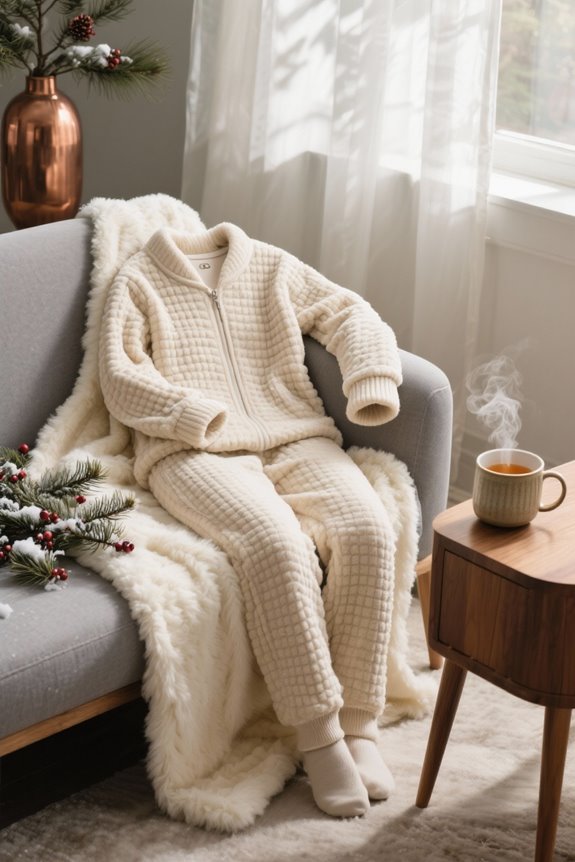
A key aspect of modern loungewear lies in its advanced moisture and temperature regulation features. Thermal loungewear utilizes innovative moisture management technologies, such as moisture-wicking fabrics, which draw sweat away from the skin to maintain dryness. These materials may incorporate hydrophobic and hydrophilic fibers, facilitating efficient moisture absorption and evaporative cooling. Temperature regulation is enhanced through fabrics that use 37.5 Technology, which maintains a comfort temperature of 37.5°C by accelerating moisture evaporation. Outlast’s heat-buffering wax capsules create a microclimate, managing heat proactively. Additionally, phase-change materials can absorb and release heat as needed, ensuring ideal thermal comfort. Such features collectively improve wearer’s comfort and performance in cold, damp environments, preventing the discomfort associated with trapped moisture. Furthermore, the benefits of wedge pillows for acid reflux relief can also complement thermal loungewear by promoting better sleep quality and overall comfort.
Impact on Sleep Quality

Maintaining an ideal body temperature during sleep plays a significant role in influencing overall sleep quality. Thermal loungewear can offer essential thermal insulation that aids in regulating body temperature. This is especially relevant for sleep improvement strategies, as adequate warmth promotes better maintenance of deep sleep stages, including REM sleep. Thermal loungewear research indicates that proper temperature regulation can lead to fewer sleep disruptions and shorter sleep onset latency. In colder climates, these garments can effectively minimize heat loss, facilitating a stable sleep environment, vital for physical recovery during non-REM sleep. Consequently, individuals, particularly older adults, may experience improved sleep quality, highlighting the function of thermal loungewear in enhancing restorative sleep patterns. Additionally, maintaining optimal air quality in the sleeping environment can further enhance sleep quality and comfort.
Choosing the Right Thermal Loungewear for Your Climate

Selecting the right thermal loungewear for cold climates involves a careful consideration of various factors that can significantly enhance warmth and comfort. Utilize materials like wool and synthetic fibers for superior insulation levels. Wool retains heat even when wet, while synthetic blends offer moisture-wicking properties, keeping the wearer dry. Pay attention to CLO values when evaluating insulation effectiveness; higher values indicate greater warmth. For style recommendations, consider full-coverage designs with cuffed openings to prevent heat loss. A slightly oversized fit allows for layering, essential for variable climates. Finally, prioritize breathability in materials to prevent overheating, guaranteeing comfort during active use or extended wear. Confirm the chosen loungewear meets both individual preferences and intended activities for optimum performance. Additionally, look for loungewear options that feature soft and durable materials, ensuring long-lasting comfort and style.
Frequently Asked Questions
How Do Thermal Loungewear Sets Compare in Price to Regular Pajamas?
Thermal loungewear sets typically cost more than basic pajamas, reflecting quality comparisons. Budget considerations reveal a modest premium for warmth, while regular pajamas offer extensive choices at lower price points, appealing to various consumer needs.
Can Thermal Loungewear Be Worn Year-Round, or Just in Winter?
Bathed in the soft glow of a chilly evening, thermal loungewear primarily offers seasonal warmth, excelling in winter months. Though some lightweight options provide year-round versatility, they’re generally not suited for summer’s heat.
Do Thermal Fabrics Require Special Care Instructions for Washing?
Yes, thermal fabrics require special fabric care, including gentle washing instructions. Hand washing or using mesh bags in cold water on delicate cycles preserves integrity, while avoiding harsh detergents and heat helps maintain thermal efficiency and garment longevity.
Are Thermal Loungewear Sets Available in Plus Sizes?
Approximately 68% of American women wear plus sizes, making the availability of plus size options essential. Retailers like Walmart, Woman Within, and Catherines offer diverse thermal sizing, ensuring comfort and style for all body types.
What Are the Environmental Impacts of Thermal Fabric Production?
Thermal fabric production greatly impacts the environment through high carbon footprints and pollutants. Utilizing sustainable materials and adopting renewable energy can mitigate emissions, though challenges remain regarding water use, chemical additives, and waste management in the industry.