As an Amazon Associate, we earn from qualifying purchases. Some links on this site are affiliate links at no extra cost to you. Our recommendations are based on thorough research and editorial judgment.


Do Air Purifiers Help With Asthma And Respiratory Issues

Air purifiers greatly aid individuals with asthma and respiratory issues by enhancing air quality. They utilize advanced filtration systems, particularly True HEPA filters, which can capture up to 99.97% of airborne allergens, including pollen, dust, and pet dander. Users often experience improved lung function and have reported reduced reliance on asthma medications. However, air purifiers primarily target single rooms and may require maintenance for peak performance. Exploring their integration into asthma management strategies can further enhance their effectiveness.
Key Takeaways
- Air purifiers improve indoor air quality, significantly reducing allergens like dust, pet dander, and pollen that trigger asthma symptoms.
- HEPA filters effectively capture 99.97% of harmful particles, promoting better lung function for asthma sufferers.
- Users of air purifiers report decreased reliance on asthma medications, particularly children, enhancing their quality of life.
- Regular maintenance and timely filter replacements are critical for air purifiers to maintain effectiveness in managing asthma symptoms.
- While beneficial, air purifiers may not cover entire homes or eliminate all types of irritants, necessitating additional asthma management strategies.
Understanding Asthma and Its Triggers
You may be interested


Asthma is a chronic condition characterized by the inflammation of the lung airways, leading to significant respiratory symptoms such as coughing, wheezing, and shortness of breath. Affecting approximately 262 million people worldwide, asthma is a prevalent issue, especially in urban areas. Common misconceptions suggest that asthma is purely a childhood illness; however, 7.7% of adults in the U.S. are also affected, with a higher incidence in females. Asthma symptoms can be triggered by various factors, particularly triggering allergens like pollen, dust mites, and pet dander. Additionally, irritants such as cigarette smoke and air pollution can exacerbate asthma symptoms. Understanding these triggers is essential for effective management and prevention of asthma episodes in individuals. Utilizing air purifiers for asthma relief can significantly improve indoor air quality, helping to minimize exposure to these triggers.
How Air Purifiers Work

Air purifiers play an essential role in improving indoor air quality through an intricate filtration process. They are equipped with a fan mechanism that draws air into the unit through intakes located at the side or rear. This polluted air then passes through multiple filter systems, beginning with a pre-filter that captures large particles, followed by a HEPA filter with a filter efficiency capable of trapping particles as small as 0.3 microns, such as pollen and dust mites. Some models also include activated carbon filters, which remove gases and odors. The purified air is then circulated back into the room, promoting continuous air circulation and maintaining healthier indoor environments ideal for those with asthma and respiratory issues. Additionally, True HEPA filters are crucial for effectively capturing smaller particles, including allergens and some viruses, further enhancing air quality.
Recommended Products
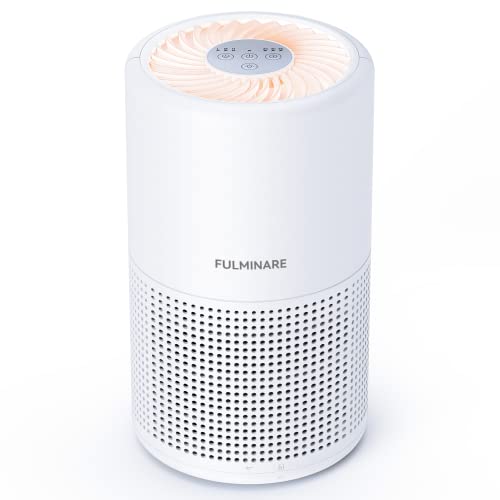
Efficient Particle Filtration: FULMINARE air purifier uses an H13 HEPA filter. Simply turn it on and maintain a clean and peaceful environment and give families health.

Effective Air Circulation Rate: this home air purifier can circulating air in twice per hour in a room measuring 323 ft² (30 m²), ensuring effective purification throughout the space

WHY CHOOSE AHAM VERIFIDE AIR PURIFIERS: AHAM (Association of Home Appliance Manufacturers) is an ANSI-accredited organization that sets strict standards for appliance performance. Air purifiers with the AHAM VERIFIDE seal have been independently tested for air cleaning performance and energy efficiency. When you choose an AHAM certified air purifier, you're choosing a product trusted for reliable and effective indoor air quality improvement
Impact of Air Purifiers on Lung Function
Improving indoor air quality through air purifiers greatly influences lung function, particularly for individuals with respiratory conditions. Air purifiers, especially those equipped with HEPA filters, effectively reduce particulate matter such as PM2.5, which enhances overall lung health. Studies indicate that users experience improved peak expiratory flow rates, although changes in forced expiratory volume in one second (FEV1) remain negligible. The benefits are more pronounced in areas with high pollution levels, where reducing fine particulate exposure becomes critical. Those spending more time indoors will find air purifiers especially beneficial for maintaining ideal air quality, promoting better respiratory outcomes. This highlights how air purifiers serve as a practical tool in supporting lung function and promoting healthier indoor environments. Additionally, many models are designed with advanced filtration systems, making them particularly effective at capturing allergens and improving air quality.
Changes in Medication Use With Air Purifier Use

The introduction of air purifiers in households has led to observable changes in medication usage for managing asthma, particularly among children exposed to elevated indoor PM2.5 levels. Research indicates significant reductions in anti-asthmatic medication, evidenced by a *p*<0.001 in a study involving 30 participants. Improvements in airway mechanics, specifically regarding resistance and reactance, correspond to a decrease in inhaled corticosteroid reliance. Additionally, a meta-analysis shows that sustained use of air purifiers enhances quality of life for patients with moderate to severe asthma while reducing fractional exhaled nitric oxide levels, a marker of airway inflammation. These findings reveal that improved air quality through air purifiers can significantly lessen medication dependency, providing a meaningful benefit for asthma management. Furthermore, utilizing devices like humidifiers with larger capacities can further enhance indoor air quality and support respiratory health.
The Role of HEPA Filters in Air Quality

While many may consider air quality as merely a background aspect of daily life, the role of HEPA filters in maintaining healthy indoor environments is substantial. HEPA effectiveness is evident, as these filters capture 99.97% of particles as small as 0.3 microns. This includes common allergens such as dust, pollen, pet dander, and mold spores. Their specialized fiber networks not only trap these pollutants but also eliminate even smaller particles through collisions. Homes equipped with HEPA air cleaners have shown significant reductions in traffic-related particles like PM2.5. Although HEPA filters facilitate effective dust removal, they do not target settled allergens or larger particles. Consequently, their positive impact on air quality is significant for those suffering from asthma or allergies. Additionally, the advanced filtration technology used in modern HEPA air purifiers enhances their ability to improve overall air quality.
Recommended Products

𝐀𝐇𝐀𝐌 𝐕𝐞𝐫𝐢𝐟𝐢𝐞𝐝 & 𝐇𝐢𝐠𝐡 𝐂𝐀𝐃𝐑 𝐕𝐚𝐥𝐮𝐞: Certified by the Association of Home Appliance Manufacturers, this air purifier provides reliable performance with a Smoke/Dust/PM2.5 CADR of 226 CFM (384 m³/h) and a Pollen CADR of 244 CFM (415 m³/h). AHAM certification guarantees effective, high-speed air purification for your home.

Suitable for Large Rooms:Air purifiers for home large room With a CADR of 280 m3,Effective indoor room coverage up to 1500 sqft.You'll notice a significant improvement in air quality within just 10 minutes,making it an ideal choice for anyone looking to enhance their indoor air environment.
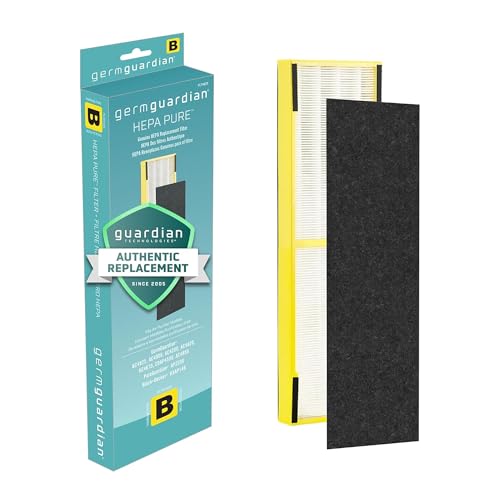
Genuine HEPA PURE Air Filter: Experience the power of authentic HEPA PURE air filtration with this GermGuardian filter replacement engineered to efficiently capture 99.97% of particles as small as 0.1 microns, including dust, pollen, and pet dander
Recommendations for Choosing an Air Purifier
When selecting an air purifier, what key factors should one consider to guarantee effective results? Room size is vital; choosing a purifier matching the square footage guarantees adequate air quality improvements. Specifically, a Clean Air Delivery Rate (CADR) should replace the room air 2-3 times per hour for peak performance. For asthma sufferers, true HEPA filters are imperative, capturing at least 99.97% of harmful particles. Noise levels matter too; low-decibel models facilitate nighttime use without disruption. Additionally, prioritizing energy efficiency—look for Energy Star certifications—can minimize operating costs. Regular maintenance, including timely filter replacements, guarantees consistent performance, consequently enabling long-term asthma relief and cleaner indoor air environments. Furthermore, models like the DBFIT HEPA Double-Sided Air Purifier effectively cover large areas, ensuring comprehensive air purification.
Recommended Products

𝗪𝗛𝗬 𝗖𝗛𝗢𝗢𝗦𝗘 𝗔𝗛𝗔𝗠 𝗩𝗘𝗥𝗜𝗙𝗜𝗗𝗘 𝗔𝗜𝗥 𝗣𝗨𝗥𝗜𝗙𝗜𝗘𝗥𝗦: AHAM (Association of Home Appliance Manufacturers) is an ANSI-accredited organization that sets strict standards for appliance performance. Air purifiers with the AHAM VERIFIDE seal have been independently tested for air cleaning performance, safety, and energy efficiency. When you choose an AHAM certified air purifier, you're choosing a product trusted for reliable and effective indoor air quality improvement

𝐖𝐇𝐘 𝐂𝐇𝐎𝐎𝐒𝐄 𝐀𝐇𝐀𝐌 𝐕𝐄𝐑𝐈𝐅𝐈𝐃𝐄 𝐀𝐈𝐑 𝐏𝐔𝐑𝐈𝐅𝐈𝐄𝐑𝐒: AHAM (Association of Home Appliance Manufacturers) is an ANSI-accredited organization that sets strict standards for appliance performance. Air purifiers with the AHAM VERIFIDE seal have been independently tested for air cleaning performance and energy efficiency. When you choose an AHAM certified air purifier, you're choosing a product trusted for reliable and effective indoor air quality improvement

MOOKA B-D02L AIR PURIFIER FOR LARGE ROOM: With the high-efficiency filtration system, the air purifier covers an area up to 1076 ft². 6 air changes per hour in 215 ft², 1 air changes per hour in 1076 ft². Modern design fits in any space from small to large rooms, bedrooms, living rooms, offices, nurseries, kitchens and basements. Perfect for pet owners, babies, children, the elderly, or anyone wanting to improve the air quality
Clinical Evidence Supporting Air Purifier Use
Clinical evidence increasingly supports the effectiveness of air purifiers in managing asthma symptoms, particularly in environments where indoor air quality is compromised. Long-term studies reveal that HEPA air purifiers notably reduce indoor particulate matter (PM2.5), with findings indicating a reduction from 17.0 µg/m³ to 9.26 µg/m³. Such reductions correlate with decreased medication use and improved asthma control in pediatric patients. Additionally, air purification may alter microbial diversity, impacting asthma prevalence and severity through reduced airborne bacterial richness. Preliminary data suggest that air purifiers decrease fractional exhaled nitric oxide (FeNO), a marker of airway inflammation. These findings reinforce the potential of air purifiers as beneficial tools for mitigating asthma symptoms, especially in vulnerable populations. Moreover, many air purifiers, such as those with washable filters, provide an economical option for maintaining air quality over time.
Limitations of Air Purifiers
Air purifiers, often marketed as essential for alleviating asthma symptoms, have notable limitations that can impact their effectiveness. These devices typically cover single rooms, creating effectiveness challenges, as multiple units are necessary for whole-home coverage. Purifiers may struggle with allergen limitations, failing to capture larger particles like dust mite feces, which are significant asthma triggers. Additionally, air purifiers require time—up to 15 minutes—to reduce airborne allergens, potentially allowing exposure during immediate allergen disturbances. Some standard HEPA filters do not eliminate chemical irritants or gases, which remain common triggers. Frequent maintenance, like filter replacement, is necessary to sustain efficiency, underscoring the complexity of using air purifiers as a sole management strategy for asthma sufferers. Moreover, the H13 True HEPA filters can significantly help mitigate allergy symptoms when maintained properly.
Integrating Air Purifiers Into Asthma Management Strategies
Incorporating air purifiers into asthma management strategies presents an opportunity to enhance indoor air quality and reduce allergen exposure. These devices are effective at filtering out indoor allergens, such as dust, pet dander, mold, and pollen, considerably lowering asthma triggers. High-Efficiency Particulate Air (HEPA) filters are particularly valuable, as they can remove up to 98% of allergen particles. While using air purifiers alone can improve respiratory health, ideal results occur when combined with other interventions, such as regular vacuuming with HEPA filters and consistent pest control. Research shows that air purifiers can contribute to a better quality of life for individuals with asthma, promoting symptom relief and better asthma control through improved air quality in their environments. Additionally, HEPA filters are crucial for maximizing the effectiveness of air purifiers in capturing fine particles that contribute to respiratory issues.
Recommended Products

𝐖𝐇𝐘 𝐂𝐇𝐎𝐎𝐒𝐄 𝐀𝐇𝐀𝐌 𝐕𝐄𝐑𝐈𝐅𝐈𝐃𝐄 𝐏𝐑𝐎𝐃𝐔𝐂𝐓𝐒: AHAM (Association of Home Appliance Manufacturers) is an ANSI-accredited organization that sets strict standards for appliance performance. Air purifiers with the AHAM VERIFIDE seal have been independently tested for air cleaning performance, safety, and energy efficiency. When you choose an AHAM certified air purifier, you're choosing a product trusted for reliable and effective indoor air quality improvement.

Cleaner Air In Minutes: Purivortex is proven to filter common pollutants from your home’s air. This air purifier purifies rooms up to 880 ft² in one hour. It can purify a 215 ft² room in about 15 minutes, giving you noticeably fresher air in a short time. Breathe clean, crisp air and feel the difference in your space. (*Tested in an ISO 17025 certified laboratory under typical residential room ventilation conditions.)

𝐅𝐀𝐒𝐓 𝐖𝐇𝐎𝐋𝐄-𝐑𝐎𝐎𝐌 𝐏𝐔𝐑𝐈𝐅𝐈𝐂𝐀𝐓𝐈𝐎𝐍: Engineered with 360° air intake and a streamlined outlet, this home air purifier delivers faster, more efficient purification, refreshing spaces up to 1500 ft² per hour. Ideal for bedrooms, living rooms, offices, dorms, and pet areas.
Frequently Asked Questions
Can Air Purifiers Reduce Asthma Symptoms in Adults?
Air purifiers can reduce asthma symptoms in adults by decreasing asthma triggers, providing breathing relief. Studies indicate improvements in quality of life and symptom reduction, particularly when used alongside other asthma management strategies for effective outcomes.
How Often Should I Change Air Purifier Filters?
Air purifier filters should be replaced based on type: HEPA every 6–12 months, activated carbon every 3–6 months, and pre-filters every 1–3 months. Regular maintenance schedules enhance effectiveness and prolong filter life.
Do Air Purifiers Produce Any Harmful Ozone Emissions?
Beneath the allure of fresh air lies a hidden danger. Certain air purifiers can emit harmful ozone, raising significant ozone concerns. This can negatively impact indoor air quality, especially for vulnerable individuals with respiratory issues.
What Is the Lifespan of an Air Purifier?
An air purifier typically has a lifespan of 5 to 10 years, depending on build quality and usage. Regular maintenance tips, like timely filter replacements, greatly enhance air purifier longevity and overall performance.
Can Pets Affect the Efficiency of Air Purifiers?
Pets greatly impact air purifier efficiency, as their allergens can clog filters, reducing airflow and overall air quality. Regular maintenance and cleaning are vital to guarantee ideal performance and mitigate allergen accumulation in indoor environments.


