As an Amazon Associate, we earn from qualifying purchases. Some links on this site are affiliate links at no extra cost to you. Our recommendations are based on thorough research and editorial judgment.


How Often To Replace Air Purifier Filters

Air purifier filters, especially HEPA filters, should generally be replaced every 6-12 months for ideal performance. However, factors such as environmental pollution, usage frequency, and specific contaminants can necessitate replacements every 3-6 months. Signs of a clogged filter include discoloration, decreased airflow, and longer odor elimination times. Maintaining a regular inspection schedule every 2-3 months can help guarantee effective filtration. Understanding these factors can enhance air quality and prolong the life of the device, providing further insight on proper maintenance.
Key Takeaways
- HEPA filters should be replaced every 6-12 months, with some conditions suggesting every 3-6 months for optimal performance.
- Activated carbon filters typically require replacement every 3-6 months, especially in environments with strong odors.
- Regular inspection every 2-3 months helps determine if filters need maintenance or replacement based on wear signs.
- Look for signs of clogging like discoloration, decreased airflow, or increased noise, indicating a need for filter change.
- Timely filter replacement improves air quality, efficiency, and overall respiratory health in your home.
Recommended Replacement Intervals for HEPA Filters
You may be interested


Replacing HEPA filters at regular intervals is crucial for maintaining air quality in residential and commercial environments. Typically, the HEPA filter lifespan ranges from 6 to 12 months in home air purifiers. However, some experts suggest a stricter filter replacement frequency of every 3 to 6 months, especially in challenging environments or with extensive usage. For industrial or cleanroom applications, HEPA filters may last up to 3 years or more, but must undergo regular leak testing every 6 to 12 months. Regular inspections for dirt accumulation or diminished airflow can inform users when an earlier replacement is necessary. Manufacturers often provide specific recommendations that should be consulted to guarantee peak performance and air quality. Additionally, True HEPA filters are essential for capturing particles down to 0.1 microns, which is crucial for effective virus protection.
Recommended Products
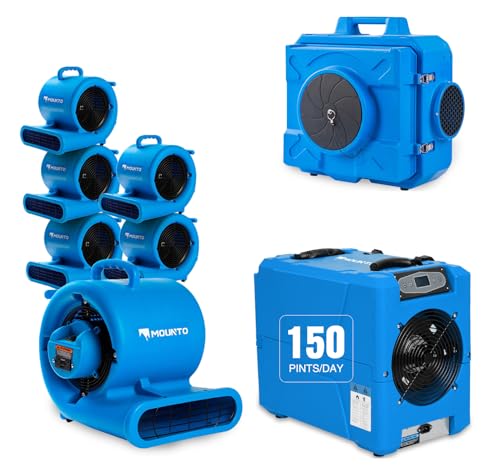
This is a combo package Deals of 6pcs 1/3hp Air Mover , 1pcs 500 Hepa 500 Air Scrubber, 1pcs 80pints Compact LGR Dehumidifier

Stens replacement parts have become a favorite among lawn and landscape professionals thanks to exceptional performance.

5-pack filter replacement bundle: Genuine replacement filters from IQAir! Designed for our advanced HealthPro Plus room air purifiers, this 5-pack 3-in-1 IQAir filter bundle includes three long-lasting replacement filters: PreMax Pre-Filter, V5-Cell Gas and Odor Control Filter, and HyperHEPA Filter.
Factors Affecting Filter Lifespan

Air purifiers are designed to maintain ideal air quality, but various factors influence the lifespan of their filters. Environmental pollution levels, such as traffic exhaust or industrial emissions, can accelerate filter clogging. Specific contaminants, including smoke or volatile organic compounds (VOCs), increase saturation rates. Seasonal airborne allergens like pollen may also contribute to filter load, particularly in specific regions. The frequency and duration of use greatly impact filter lifespan; continuous operation leads to quicker saturation compared to intermittent use. Additionally, filter materials play an essential role; well-constructed filters perform better, resisting clogging. Indoor activities, humidity levels, and dust accumulation further affect filter efficacy, underscoring the complex environmental impact on air purifier performance and maintenance. For instance, HEPA filtration systems are known to effectively capture various airborne particles, thereby influencing the maintenance schedule.
Recommended Products
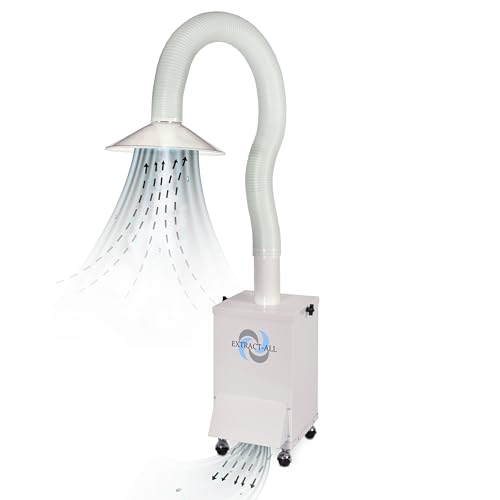
HAIR SALON AIR PURIFIER: Prolonged exposure to high vapor hair products and the variety of harmful chemicals generated by salon treatments can result in an array of respiratory health issues. The key to preventing illness or discomfort is keeping the air in your salon clean. The Extract-All salon pure air fume extraction for hair salons is designed to do all that and more!
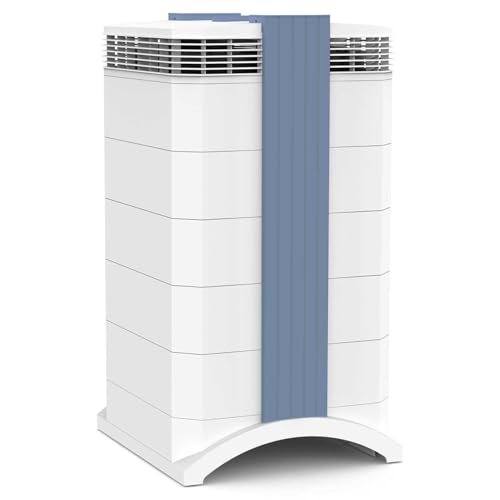
COMPREHENSIVE MULTIGAS FILTRATION - The GC MultiGas XE by IQAir features advanced filtration for chemicals, tobacco smoke, odors, and airborne contaminants. Designed for large rooms, it combines HyperHEPA filtration, activated carbon, gas cartridges, and post-filter sleeves to help capture 99% of targeted pollutants.

COMPLETE HOME STARTER BUNDLE - Breathe cleaner air in every room with the iAdaptAir Home Air Purifier Starter Bundle. Includes 1 Small, 1 Medium, and 1 Large purifier, delivering powerful, multi-room air purification for living rooms, kitchens, bedrooms, and other shared spaces in your home. Perfect for families, allergy sufferers, and anyone looking to improve indoor air quality.
Maintenance Guidelines for Different Filter Types

Maintaining filters in air purifiers is essential for optimal performance and efficiency. True HEPA filters should be replaced every 6 to 12 months, with caution against washing unless specified by the manufacturer. Activated carbon filters require replacement every 3 to 6 months, particularly in high-odor environments. They are not washable, and using genuine filters assures peak performance. For washable pre-filters, a maintenance schedule of cleaning every 1 to 3 months is recommended, while non-washable options should be replaced every 3 to 6 months. Regular inspection of filter types, every 2 to 3 months, helps determine the need for maintenance. Proper adherence to these guidelines greatly improves air quality and purifier effectiveness. Additionally, the filtration system in air purifiers can vary, influencing replacement schedules and overall maintenance requirements.
Recommended Products

3-pack filter replacement bundle: Genuine replacement filters from IQAir! Designed for our advanced HealthPro Plus room air purifiers, this 3-pack 3-in-1 IQAir filter bundle includes three long-lasting replacement filters: PreMax Pre-Filter, V5-Cell Gas and Odor Control Filter, and HyperHEPA Filter.

5-Pack HEPA Replacement Filter: Genuine HyperHEPA replacement for IQAir HealthPro Series Air Purifiers

1 of Coway Airmega 400 in Graphite/Silver Smart Air Purifier with 1,560 sq. ft. Coverage
Signs That Indicate a Need for Filter Replacement

Indicators signaling the need for filter replacement in an air purifier can often be identified through visual, performance, and operational cues. Filter discoloration, characterized by dark patches or noticeable dirt, suggests particle saturation. Additionally, airflow decrease—evident when air feels weak even on high settings—may indicate blockage. If the purifier takes longer to eliminate odors, or if allergy symptoms persist, these may also signal inefficiency. Increased noise from the motor points to strain, while visible dust accumulation on surfaces can indicate inadequate filtration. Unexpected rises in energy bills may result from the motor working harder to push air through a clogged filter. Regular monitoring of these signs can guarantee continued air quality and efficient purifier performance. It’s also essential to consider that filters are typically changed every 6-12 months depending on usage.
Recommended Products

WHOLE-HOME AND EXTRA LARGE ROOM COVERAGE Designed for open floor plans and whole-home air purification. Rapidly cleans 1,043 ft2 in 15 minutes & up to 4,172 ft2 in 1 hour, delivering consistent purification where you sleep, work, and relax.

4-STAGE FILTRATION FOR CLEANER AIR - Featuring a filter with integrated Activated Carbon and Zeolite, this air purifier captures airborne particles, including dust, pollen, pet dander, mold, smoke, and VOCs, offering a healthier, cleaner environment for your home or office.
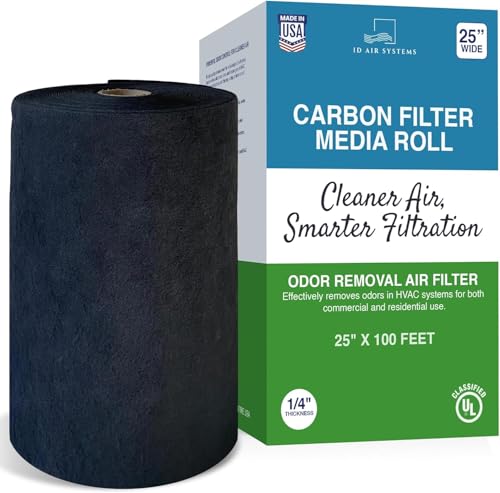
Advanced Carbon Filter Media: Our air conditioner filters employ activated carbon for superior odor removal, making them ideal for HVAC systems and range hoods. This carbon filter excels as a range hood filter and vent filters, ensuring fresh air.
Tools to Monitor Filter Condition

Effective tools exist for monitoring the condition of air purifier filters, ensuring ideal performance and air quality. Sensor technologies, such as differential pressure sensors, can detect filter clogging by measuring pressure drops across filters. Advanced systems use combinations of pre- and post-filter sensors to enhance accuracy. AI and cloud-connected solutions provide predictive maintenance by analyzing historical data to optimize replacement scheduling. Multi-parameter indoor air quality monitors assess particulate matter, VOCs, and CO2, allowing users to track filter efficiency in real-time. These integrations enable automation of air purifier settings based on monitored air quality, enhancing indoor environments. Consequently, adopting these technologies facilitates timely filtration management, ultimately improving overall air quality and system reliability. Additionally, using wedge pillows can further enhance overall comfort during sleep, especially for those with respiratory issues.
Recommended Products

Advanced HyperHEPA Filtration: Designed to remove and trap 99.995% of all airborne particles down to 0.003 microns, the Atem X supplies unequaled protection against dust, pollen, pet dander, smoke from wildfires, and more. True HEPA filtration

PERFECT FOR MULTIPLE ROOMS: Comes with multiple indoor air handlers for individual rooms and a single outdoor unit. Enjoy individual temperature controls in each room for ideal climate control.

[What You Get] xTool S1 40W laser engraver, smart air assist, honeycomb, riser base, RA2 pro, 1064nm laser Module and safety set.
Benefits of Timely Filter Replacement
Timely filter replacement in air purifiers plays an essential role in enhancing indoor air quality and device performance. Regularly changed filters help capture dust and allergens, improving air quality by effectively reducing indoor pollutants. Fresh filters remove up to 99.97% of fine particles, including PM2.5, pollen, and pet dander, which can alleviate asthma and allergy symptoms. Clean filters maintain ideal airflow and operating efficiency, avoiding strain on the device, while preserving the Clean Air Delivery Rate (CADR) necessary for effective pollutant removal. Additionally, replacing filters decreases household dust accumulation, translating to less cleaning effort. Overall, timely filter replacement leads to better respiratory health, reduced allergy triggers, and a cleaner, more efficient indoor environment for all occupants. Furthermore, using a high-efficiency HEPA filter can significantly enhance the air purification process by capturing a wider range of airborne particles.
Manufacturer Recommendations and Compliance
Manufacturer recommendations regarding air purifier filter replacement are essential to maintaining ideal performance and air quality. Compliance importance is highlighted in these guidelines, which suggest varying replacement intervals based on filter type. HEPA filters typically require changes every 6 to 12 months, while pre-filters should be replaced every 3 months to guarantee effective airflow. Certain models with enhanced filters may need changing every 3 to 6 months. Regular visual inspections for damage or clogging complement adherence to manufacturer guidelines. Built-in indicators help monitor filter status. Additionally, utilizing air quality monitors can provide insights on when filters are less effective, reinforcing the need for timely maintenance. Following these recommendations supports overall system efficiency and extends the purifier’s lifespan. Incorporating True HEPA filters into air purifiers significantly enhances their ability to capture microscopic allergens, making timely replacements even more crucial for maintaining air quality.
Frequently Asked Questions
Can I Clean and Reuse HEPA Filters?
Cleaning and reusing HEPA filters is generally not recommended, as it impacts filter efficiency and poses health risks. Despite potential cost considerations in filter maintenance, replacement guarantees ideal air quality and performance.
What Happens if I Don’T Replace the Filter?
Neglecting filter maintenance deteriorates air quality, allowing pollutants to circulate, worsening health issues. Clogged filters compromise efficiency, leading to increased energy costs and potential system failure, ultimately harming both finances and well-being in the long run.
Are Off-Brand Filters as Effective as Original Ones?
Off-brand filters generally lack the same filter performance as original ones, often leading to inefficiencies. Although they may offer a lower cost comparison initially, their long-term effectiveness and reliability typically fall short of OEM standards.
Can Air Purifiers Work Without a Filter?
Yes, certain air purifiers operate without traditional filters, utilizing technologies like electrostatics or UV. However, this filter functionality can affect air quality, as some pollutants may not be effectively trapped or removed compared to filtered systems.
How Do I Dispose of Used Filters Properly?
Like fallen leaves, used filters require careful handling. He discovered filter recycling methods and safe disposal techniques, bagging them securely to contain dust, checking local resources for recycling opportunities, and ensuring responsible waste management practices.


