As an Amazon Associate, we earn from qualifying purchases. Some links on this site are affiliate links at no extra cost to you. Our recommendations are based on thorough research and editorial judgment.


Do Humidifiers Help With Congestion And Breathing

Humidifiers help alleviate congestion and improve breathing by adding moisture to the air, which is essential for respiratory health. Ideal humidity levels, ideally between 40-60%, enhance airway hydration and thin mucus. This reduces irritation and promotes effective cough reflexes. Clinical studies show that humidified air decreases dryness-related symptoms in participants, though maintenance is important to prevent microbial contamination. Proper management of humidity levels is critical for maximizing the benefits of humidifiers, making further exploration of their effectiveness beneficial.
Key Takeaways
- Humidifiers maintain moisture in the air, which aids in thinning mucus and reducing congestion.
- Proper humidity levels enhance airway hydration and improve overall respiratory comfort.
- Humidified air helps maintain the protective mucous layer, essential for trapping irritants.
- Regular maintenance of humidifiers prevents microbial contamination, ensuring health benefits.
- High humidity levels can lead to excessive mucus production, so balance is key.
The Importance of Moisture for Respiratory Health
You may be interested


Moisture plays an essential role in maintaining respiratory health, as the balance of relative humidity considerably impacts respiratory function. Low relative humidity, particularly below 40%, leads to dryness and irritation in the respiratory tract, compromising respiratory barriers. This condition heightens susceptibility to infections, damaging lung tissue. The moisture balance is vital, as dry air impairs mucociliary clearance, altering mucus thickness and encouraging bacterial growth. In addition, disrupted mucosal barriers can increase permeability to allergens and pollutants, triggering inflammatory responses. Conversely, humidity levels exceeding 60% can lead to excessive mucus production, worsening symptoms in individuals with obstructive lung conditions. Maintaining ideal humidity is essential to protect respiratory health, ensuring effective immune defense and minimizing adverse respiratory effects. Humidifiers can effectively alleviate dry air issues and promote optimal moisture levels, contributing to overall respiratory well-being.
How Humidifiers Work to Improve Breathing
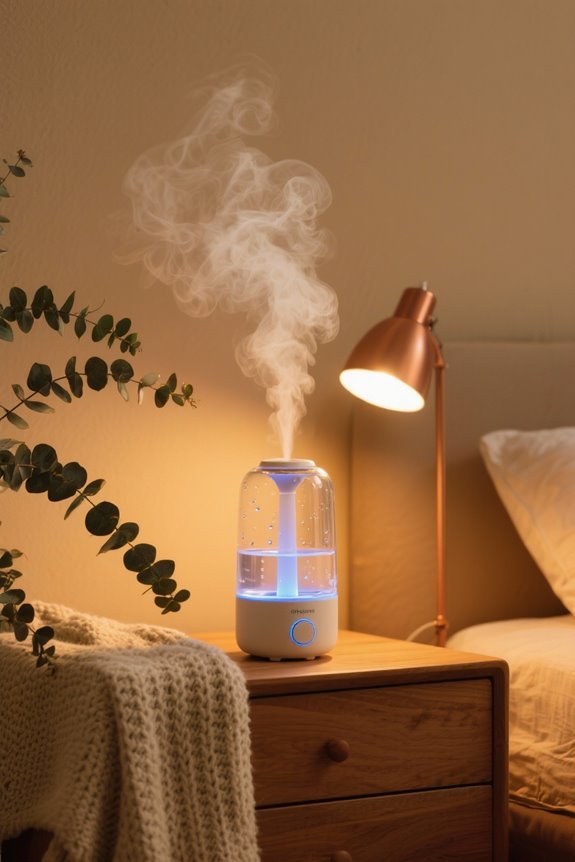
Humidifiers enhance breathing by introducing moisture into the air, greatly impacting respiratory function. The humidifier mechanics work by adding water vapor to inspired air, improving airway hydration and assisting normal nasal functions. This process is crucial, especially when natural humidity levels are compromised. With adequate humidity, the airway mucosa remains hydrated, reducing mucosal damage and maintaining the protective mucous layer. The effects of humidity directly benefit mucus consistency, thinning it to promote effective coughs and eliminate congestion. Moist air lessens irritation, supporting overall respiratory comfort and reducing symptoms linked to dry air. Moreover, maintaining ideal humidity levels can enhance lung compliance, ultimately facilitating easier and more efficient breathing, which is essential for individuals with respiratory challenges. Additionally, using a humidifier with essential oil diffusion can provide therapeutic benefits that further support respiratory health.
Types of Humidifiers and Their Effects on Congestion

Effective management of respiratory congestion can greatly benefit from various types of humidifiers, each with unique mechanisms and characteristics. Ultrasonic humidifiers, known for their quiet operation and energy efficiency, offer cool or warm mist options, targeting small to medium rooms. Evaporative features self-regulate humidity levels, making them suitable for asthma sufferers but prone to bacterial contamination. Warm mist options produce steam, soothing irritated passages, though they pose burn risks. Cool mist, recommended by the FDA for congestion relief, effectively shrinks nasal passages. Whole-house solutions provide consistent humidity throughout a home, while portable convenience allows targeted relief. Maintenance tips are essential to guarantee air quality, especially in portable units, preventing mineral dust and bacteria buildup. Additionally, coverage area considerations are crucial when selecting a humidifier, as the right size can enhance its effectiveness in alleviating congestion symptoms.
Clinical Evidence Supporting Humidifier Use

A growing body of clinical evidence suggests that proper humidity levels can greatly impact respiratory health. Research indicates that humidifiers can alleviate dryness in the upper airways, potentially reducing symptoms related to sinusitis, colds, and flu. In a systematic review involving 4,551 participants, many reported a decrease in dryness-related symptoms. Humidified air helps maintain a thin mucus layer essential for trapping irritants, thereby improving clinical outcomes. While subjective relief is frequently noted by patients, studies show variable results regarding humidifier safety in workplaces and schools. High-quality trials are necessary to conclusively verify the benefits of humidification in the general population. Overall, the potential advantages of using humidifiers for respiratory comfort remain promising, though further research is warranted. Additionally, maintaining optimal humidity levels is crucial to maximize the benefits of using a humidifier effectively.
Possible Limitations of Humidifier Use

While clinical evidence supports the benefits of humidifiers for respiratory health, potential limitations warrant careful consideration. Humidifiers can lead to humidity fluctuations, which may disrupt respiratory comfort. Improper maintenance can result in microbial contamination, as unclean tanks develop bacteria and fungi, potentially causing serious respiratory issues. Studies show that inhaling contaminated mist could induce conditions like “humidifier lung.” Additionally, excessive humidity above 50% encourages mold growth, further complicating respiratory health. Devices like ultrasonic humidifiers can aerosolize minerals and contaminants, which may be harmful when inhaled. Regular cleaning and monitoring humidity levels with a hygrometer are essential; without them, humidifiers may do more harm than good by increasing infection risks or worsening asthma and allergies. Notably, using products designed to reduce mineral buildup can significantly enhance the safety and effectiveness of humidifier use.
Humidifiers and Their Impact on Allergies
Understanding the relationship between humidifiers and allergies requires attention to ideal humidity levels, as well as their potential drawbacks. Suitable indoor humidity should range between 30% and 50% to effectively minimize allergy triggers. Low humidity, below 30%, irritates the nasal passages and lungs, increasing vulnerability to allergens. Conversely, high humidity exceeding 50% encourages dust mites and mold growth, which are significant allergens. Proper humidifier maintenance is essential; regular cleaning and the use of distilled water can mitigate bacteria and mold buildup. Misuse or neglect can exacerbate allergy symptoms by increasing indoor allergens. Ultimately, effective allergy management relies on maintaining balanced humidity levels while ensuring that humidifiers are adequately maintained to promote respiratory health. Additionally, using quality replacement parts can significantly enhance the performance and efficiency of your humidifier, further supporting respiratory well-being.
Addressing Asthma With Controlled Humidity
Asthma management requires attention to multiple environmental factors, including humidity levels, which play a significant role in respiratory health. Maintaining a humidity balance is essential for individuals with asthma. Indoor humidity should ideally range between 30% and 50% to prevent exacerbation of symptoms and limit allergen growth. Dry air can irritate airways, potentially leading to increased asthma symptoms. Although studies show mixed results regarding the short-term benefits of humidifiers, no significant adverse effects were recorded during a five-week trial. The CDC and EPA recommend regular monitoring of humidity levels, as excessive moisture can promote mold and dust mite proliferation—both known triggers for asthma attacks. Adhering to asthma guidelines guarantees a safer breathing environment for asthma patients. Additionally, using a humidifier with custom humidity settings can help maintain optimal moisture levels tailored to individual needs.
Hygiene Practices for Safe Humidifier Use
Maintaining proper hygiene practices for humidifiers is essential, as neglecting these steps can lead to the growth of harmful microorganisms and diminish air quality. Adhering to hygiene guidelines entails emptying and drying the water tank daily. This practice prevents mold and bacteria accumulation. A regular cleaning schedule is crucial; rinsing the water basin with mild soap after each use helps remove residue. Deep cleaning every three days or weekly involves soaking parts in diluted vinegar to dissolve mineral deposits. Additionally, using distilled water minimizes microbial contamination. Finally, ensuring all components are completely dry before storage reduces mold risk. Following these practices effectively maintains humidifier hygiene, offering users cleaner air and improved respiratory health. Regular maintenance is critical to preventing mold growth, ensuring optimal performance and safety.
Safety Considerations for Humidifier Users
Humidifiers can improve indoor air quality, but safety considerations are paramount for users. Contaminated humidifiers can release bacteria, fungi, and mineral particles that may worsen respiratory conditions. Regular humidifier maintenance, including thorough cleaning every three days, is essential to mitigate these risks. For instance, ultrasonic humidifiers can emit mineral particles exceeding regulated PM₂.₅ levels, contributing to respiratory symptoms. Using distilled or demineralized water can greatly reduce the risk of inhaling “white dust,” especially for vulnerable populations like infants and individuals with asthma. Furthermore, visible signs of contamination, such as film or scum, indicate a need for prompt attention. Without proper care, even seemingly clean mist can pose health hazards, emphasizing the importance of diligent maintenance in promoting safe air quality. Additionally, features like auto shut-off enhance safety by preventing overheating and potential accidents.
Managing Humidity Levels Effectively
Effective humidity management is essential for respiratory health, as the ideal indoor humidity range falls between 30% and 50%. Maintaining relative humidity (RH) within this range is critical; it helps reduce the survival rate of airborne viruses and limits allergen growth, such as dust mites and mold, that can trigger asthma. Using appropriate humidity measurement tools aids in achieving these ideal humidity practices. For instance, a hygrometer can help guarantee that indoor environments do not exceed 60% RH, which promotes excessive allergen proliferation. Conversely, low humidity levels below 30% can cause dry airways, leading to respiratory irritation. Therefore, balancing humidity levels is fundamental to enhance comfort and support overall respiratory function and health. Additionally, maintaining optimal humidity levels can also enhance the performance of insulated tumblers, ensuring drinks remain at the desired temperature for longer periods.
Alternatives to Humidifiers for Congestion Relief
Congestion relief can be approached through a variety of methods that serve as alternatives to humidifiers. Nasal irrigation, using saline sprays or neti pots, can effectively thin mucus and clear passages. Steam inhalation, such as hot showers or steam bowls, helps to moisten sinuses and reduce inflammation. Over-the-counter (OTC) medications, including pain relievers and decongestant sprays, can alleviate symptoms but should be used carefully to avoid rebound effects. Warm compresses applied for 5-10 minutes can relieve sinus pressure and promote drainage. Additionally, essential oils, like eucalyptus, and herbal remedies, such as ginger and turmeric, may provide mild decongestant effects. These options, when used thoughtfully, can support better breathing and overall comfort.
The Role of Hydration in Respiratory Comfort
Hydration plays an essential role in maintaining respiratory comfort, as it directly influences lung function and overall airway stability. Effective hydration strategies enhance lung volumes and parameters like FEV1, which are key for better airflow. For athletes, proper hydration can reverse dehydration-induced airway narrowing, thereby reducing exercise-induced bronchoconstriction. Small airways, particularly sensitive to hydration status, benefit from enhanced fluid levels, protecting them from injury and inflammation. Additionally, maintaining ideal hydration helps stabilize airways, potentially reducing hyper-responsiveness and enhancing exercise capacity. Adequate upper airway hydration can also lower respiratory droplet generation, minimizing infection risks. Therefore, managing hydration effectively is critical for both acute and chronic respiratory health, influencing overall pulmonary function and airway stability.
Traditional Methods for Conquering Congestion
Relief from nasal congestion can be achieved through various traditional methods that address underlying causes. Steam inhalation benefits those suffering from congestion, as inhaling warm, moist air effectively loosens mucus and soothes irritated nasal tissues. A typical session lasts 10-15 minutes, utilizing a towel tent to trap steam, while adding essential oils like eucalyptus can enhance decongestant effects. Nasal irrigation techniques, such as using saline sprays or neti pots, also help clear out mucus and allergens, consequently reducing inflammation. Daily use is safe, as saline solutions require sterile or distilled water and non-iodized salt. These traditional approaches are cost-effective and easy to implement, providing significant, lasting relief during episodes of cold or allergies.
Frequently Asked Questions
Can Humidifiers Help With Snoring During Sleep?
Humidifiers can be effective snoring solutions as sleep aids, adding moisture to the air, soothing irritated airways, and reducing inflammation. Maintaining ideal humidity levels may enhance overall comfort and potentially decrease snoring occurrences during sleep.
How Often Should I Clean My Humidifier?
Portable humidifiers require cleaning every three days, while whole-house systems benefit from annual cleaning. Maintenance tips include rinsing daily and replacing filters annually, ensuring ideal humidity control and reducing health risks associated with poor maintenance.
Do Humidifiers Help With Seasonal Allergies?
Humidifiers can enhance humidifier effectiveness for allergy relief by maintaining ideal humidity levels. They alleviate dryness-related symptoms and reduce airborne allergens, but must be used carefully to prevent mold and dust mite growth.
Can I Use Essential Oils in My Humidifier?
In a garden of healing fragrances, essential oils thrive only in compatible humidifier soil. Users must choose wisely, utilizing diffuser options tailored for specific essential oil types to nurture both device performance and personal well-being effectively.
What Is the Ideal Humidity Level for Breathing Comfort?
The ideal humidity level for breathing comfort is typically between 30% and 50%. Maintaining this range supports mucous membrane hydration, reduces irritation, and helps mitigate the risk of respiratory issues associated with low or high humidity levels.


