As an Amazon Associate, we earn from qualifying purchases. Some links on this site are affiliate links at no extra cost to you. Our recommendations are based on thorough research and editorial judgment.


Ideal Home Humidity Level: Targets By Room And Season

Ideal indoor humidity levels range from 30% to 60%, varying by room and season. For living rooms and bedrooms, aim for 30% to 50% humidity; this helps protect wooden furnishings and improves sleep comfort. In bathrooms, maintain 40% to 60% humidity to prevent mold. During winter, target 30% to 50% humidity to combat dryness. In summer, keep it between 40% and 55% to inhibit mold growth. Effective humidity management can enhance air quality and protect health, creating a more comfortable environment. More insights follow.
Key Takeaways
- Ideal indoor humidity should be maintained between 30% and 60% for overall comfort and health throughout the year.
- Living rooms and bedrooms should have humidity levels set between 30% and 50% to minimize allergens and protect furnishings.
- For bathrooms, aim for 40% to 60% humidity, ensuring adequate ventilation to prevent mold growth.
- In winter, humidity should be adjusted to 30% to 50%, while spring and summer should target 40% to 55% to prevent mold.
- Regular humidity monitoring and control methods like humidifiers and dehumidifiers are essential for maintaining optimal indoor air quality.
Recommended Indoor Humidity Ranges
You may be interested
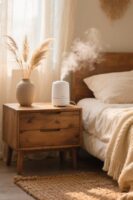


Indoor humidity levels play an essential role in overall comfort and health. Maintaining relative humidity between 30% and 60% is vital for ideal indoor air quality. Specifically, living rooms and bedrooms benefit from humidity control set at 30% to 50%. This range minimizes allergens and enhances comfort levels. Bathrooms, due to their inherent moisture, can maintain higher levels, from 40% to 60%, provided there is adequate ventilation to prevent mold growth. Kitchens and laundry areas should not exceed 60% humidity to avoid dampness. Additionally, basements require humidity to remain below 50% to reduce mold and dust mite proliferation. Keeping humidity within these specified ranges supports respiratory health and overall well-being, making vigilant humidity monitoring essential. Moreover, utilizing a humidifier with safety features can enhance the effectiveness of maintaining optimal humidity levels while ensuring a safe environment for children.
Seasonal Humidity Adjustments

Seasonal changes necessitate tailored humidity control strategies. In winter, aiming for 30% to 50% humidity enhances warmth and curtails dry air issues like respiratory ailments. Conversely, during spring and summer, maintaining levels between 40% and 55% is crucial to stave off mold and bacteria while improving cooling efficiency. Fall requires careful adjustments to around 40% to 60% humidity, as air begins to dry. Proper humidity management not only fosters comfort but also protects furnishings and reduces airborne irritants. By monitoring and adapting humidity levels according to these specific seasonal ranges, homeowners can optimize indoor air quality and achieve a healthier living environment year-round. Additionally, using air purifiers for odors can further enhance air quality by removing pollutants and unpleasant smells that may arise from humidity fluctuations.
Recommended Products


The humidity controller ranges from 5 to 99.99% RH

Perfect replacement for an old or non-functioning attic fan thermostat
Humidity Targets by Room Type

Maintaining appropriate humidity levels is essential for different rooms within a home, as each space has unique requirements. For the living room, ideal relative humidity should range between 30% to 50%, supporting comfort while limiting allergens. Levels should ideally hover around 40% to 50% to protect wood furnishings and prevent mold. In bedrooms, recommended humidity is also 30% to 50%, optimizing sleep comfort and respiratory health. Maintaining 40% to 50% humidity aids in reducing dryness of the nasal passages during sleep. Excess humidity above 60% in both living rooms and bedrooms can lead to discomfort, dust mites, and mold growth. Regular monitoring and adjustment are necessary for maintaining these targeted humidity levels throughout the home. Additionally, maintaining ideal humidity levels can enhance the effectiveness of heating pads used for pain relief.
Recommended Products
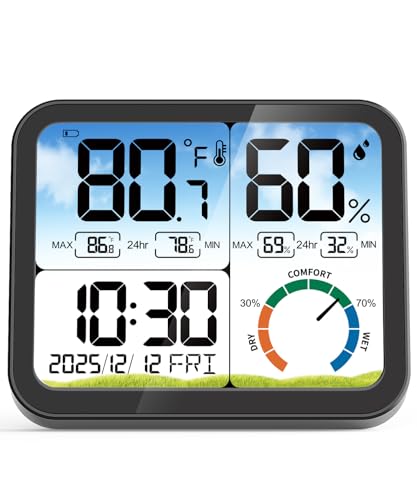
5.8'' Extra Large Display with Backlight: 5.8'' large HD LCD screen to show the current temperature and humidity with comfort indicator, Max & Min records in a day, clock & calendar. A simple touch on the top to turn on backlight for 15s when powered by backup batteries only. Clear and power-saving, read more easily under backlight. Simple operation buttons on the back for manual setting or °F/°C switching

Wellness Indicator: This humidity meter with humidity level icon indicates air conditions - DRY/COMFORT/WET, allowing this humidity sensor to ensure you’re always aware of changes to your home/household with just a quick glance
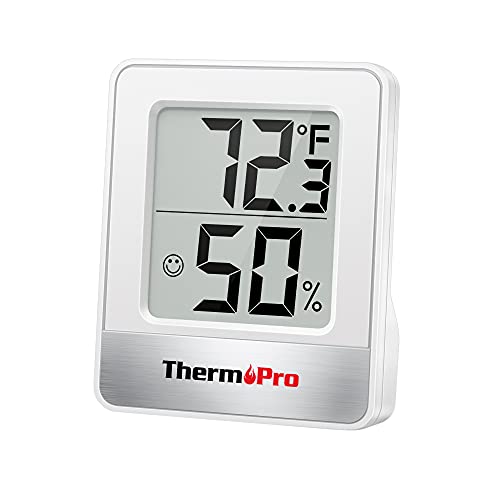
Face Icon Comfort Indicator: Humidity temperature gauge features face icons to indicate DRY/COMFORT/WET air conditions, quickly informs you how to adjust your humidifier or dehumidifier to achieve optimal comfort.
Health Impacts of Humidity Levels
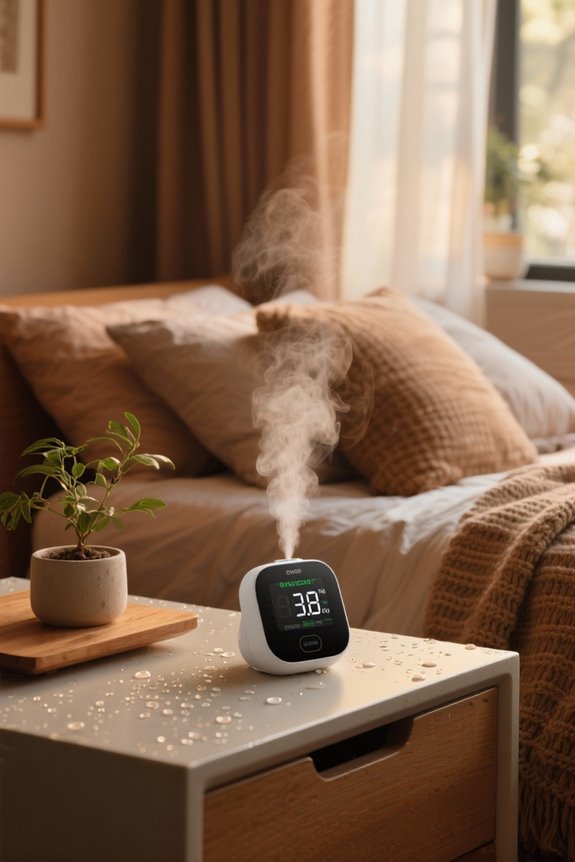
Appropriate humidity levels play a critical role in maintaining overall health and well-being. High humidity, typically above 60%, can lead to humidity-related illnesses, including heat exhaustion, respiratory issues, and increased infections due to bacterial growth. Additionally, it can impair thermoregulation and elevate cardiovascular risks. Conversely, low humidity, often below 30%, can result in dry air infections and discomfort, exacerbating conditions like eczema and eye irritation. Both extremes diminish immune system function, increasing vulnerability to pathogens. As a result, effective humidity management tips include using humidifiers in dry conditions and dehumidifiers in moist environments. Maintaining indoor humidity between 30% and 60% promotes health, minimizes allergy triggers, and enhances overall comfort. Furthermore, maintaining good indoor air quality is essential for preventing respiratory issues related to humidity extremes.
Monitoring and Controlling Humidity

Effective humidity monitoring and control are essential for maintaining a healthy indoor environment, as fluctuations can profoundly impact comfort and air quality. Various sensor types are available, including capacitive, resistive, and thermal conductivity sensors, each offering unique advantages for different applications. Control methods encompass HVAC systems, humidifiers, dehumidifiers, and humidistats, which can be analog, digital, or smart variants. Seasonal adjustments are key to managing humidity effectively throughout the year, especially in specific rooms like bathrooms and kitchens. Zoned monitoring systems allow for targeted humidity control in various areas, while centralized systems provide overall management. Calibration of sensors is critical to guarantee accurate readings, supporting effective humidity management to create a comfortable and safe living environment. Additionally, using washable filters in air purifiers can help improve indoor air quality, complementing humidity control efforts.
Recommended Products
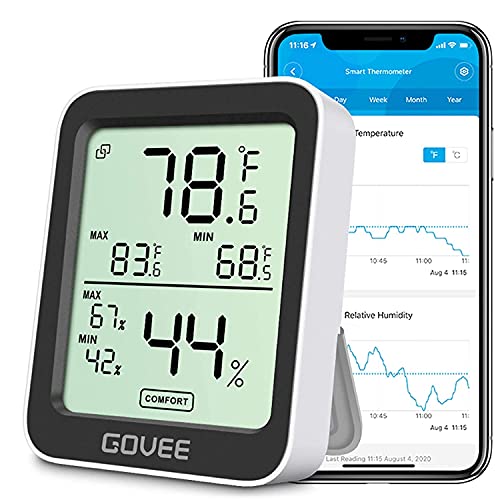
Smart Features: The Govee Wireless Thermometer Hygrometer supports all basic functions as well as smart functions such as remote monitoring and temp humidity graphs. Our humidity meters are reliable and easy to use for homes, greenhouses and more.(Only supports 164ft Bluetooth connection)

High Accuracy & Dual Channels: Utilizing a built-in smart Swiss sensor, coupled with the option to incorporate an external sensor probe for dual-channel monitoring, this wireless thermometer hygrometer delivers rapid, real-time, and highly accurate temp & humidity readings (±0.9℉/±5%RH)
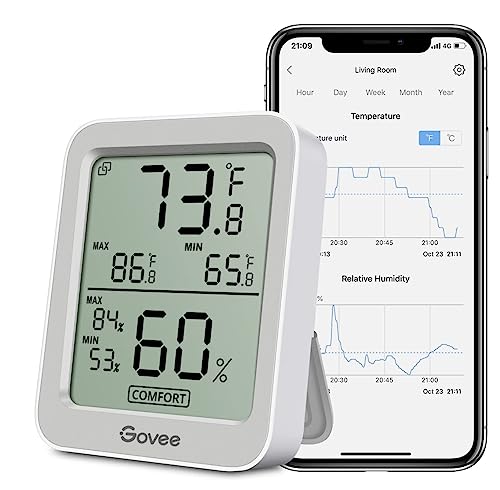
Easy to Connect: Simply download the Govee Home app, search for and select H5075, and pair it successfully within minutes. With a 164ft/50m Bluetooth range, you'll be notified of any air changes immediately.
Frequently Asked Questions
How Do I Measure Indoor Humidity Accurately?
To measure indoor humidity accurately, individuals should utilize reliable humidity measurement tools like digital hygrometers. Employing moisture meter techniques, they should place devices away from direct sunlight, heat sources, and observe readings at various times throughout the day.
What Products Increase Indoor Humidity Effectively?
To enhance indoor humidity, various humidifier types—ultrasonic, evaporative, and whole-house—prove effective. Meanwhile, moisture meters guarantee precise humidity measurement, guiding ideal settings for comfort and health, often unexpectedly transforming living spaces.
Can Houseplants Impact Indoor Humidity Levels?
Houseplants positively impact indoor humidity levels through transpiration, enhancing humidity retention within spaces. Their collective benefits contribute to a healthier environment, especially when grouped strategically, aiding both plant health and overall indoor air quality.
How Does Insulation Affect Home Humidity Control?
Insulation materials act as effective humidity barriers, reducing moisture infiltration and maintaining stable indoor conditions. Proper installation guarantees minimal air leakage, ultimately controlling humidity levels by preventing condensation and promoting a healthier living environment.
What Are Signs of Inadequate Humidity Management?
A study revealed that 30% of households experience inadequate humidity management. Symptoms include dry skin, wood cracking, and irritated eyes, all negatively impacting comfort levels and indicating the detrimental effects of improper humidity control in living environments.


