As an Amazon Associate, we earn from qualifying purchases. Some links on this site are affiliate links at no extra cost to you. Our recommendations are based on thorough research and editorial judgment.


Filterless Vs Filter Based Humidifiers: Which To Choose

When choosing between filterless and filter-based humidifiers, key factors include maintenance, air quality, and operation. Filterless models, such as ultrasonic types, simplify cleaning and eliminate filter replacement but may produce “white dust” from mineral buildup. In contrast, filter-based units effectively trap airborne particles and provide consistent humidity control, though they require ongoing filter replacements. Users should consider room size and personal preferences, ensuring humidity levels remain between 30% and 50% for ideal health benefits. More detailed comparisons can guide the decision further.
Key Takeaways
- Filterless humidifiers are quieter, portable, and have no filter replacement costs, but require regular cleaning to prevent bacterial growth.
- Filter-based humidifiers effectively trap airborne particles and provide consistent humidity control but incur maintenance costs with filter replacements.
- Consider the size of the room and desired humidity levels; larger areas may benefit more from filter-based models.
- For minimal maintenance and lower initial costs, filterless ultrasonic humidifiers are a suitable choice for medium-sized rooms.
- Monitor humidity levels between 30% and 50% to prevent mold growth and ensure optimal health benefits from humidifier use.
Overview of Humidifiers
You may be interested


Humidifiers play a critical role in enhancing indoor air quality, especially in environments with low humidity levels. There are several types of humidifiers, each with distinct features. Ultrasonic humidifiers utilize high-frequency vibrations to produce a fine mist, making them energy-efficient and quieter than other models. Evaporative humidifiers blow air through a wet wick, ensuring a natural process with no hot surfaces, thereby enhancing safety. Vaporizers heat water to create steam, providing warm mist options. Some models combine cool and warm mist functionalities, offering versatility. Selecting the right humidifier involves considering room size, ease of maintenance, and noise levels. Overall, understanding these types and humidifier features can help individuals choose the most suitable device for their needs. Additionally, many modern smart humidifiers feature app compatibility and voice control for enhanced convenience.
How Filterless Humidifiers Work

A diverse range of mechanism designs enables filterless humidifiers to effectively enhance indoor air quality. Ultrasonic technology and impeller mechanisms are two primary methods. Ultrasonic humidifiers use high-frequency sound waves to create fine water droplets, which rapidly evaporate, releasing a cool mist. Typically, these devices comprise a water reservoir, a vibrating diaphragm, and a nozzle for mist dispersion. On the other hand, impeller humidifiers utilize a spinning disk to break water into droplets, achieving similar humidity levels. Both systems produce cool mist, ideal for warmer climates. Maintenance involves routine cleaning to prevent bacterial growth, yet they do not require filter replacements, making them a convenient option for users seeking efficient humidity regulation in their spaces. Additionally, using distilled water can help prevent mineral buildup and enhance overall performance.
Advantages of Filterless Humidifiers

When considering the advantages of filterless humidifiers, several key factors emerge that highlight their efficiency and usability in various environments. Cost comparison shows that while initial expenses might be higher, long-term savings are notable due to zero maintenance costs associated with filter replacements. Additionally, maintenance simplicity makes these humidifiers easy to clean; users can simply wipe down parts without hassle. Noise reduction is another benefit, as many models operate quietly, particularly ultrasonic designs, ideal for bedrooms or noise-sensitive areas. Portability benefits are apparent as well; lightweight construction enables users to relocate units easily and use them in multiple rooms. All these factors contribute to a highly effective humidification solution, tailored for diverse settings. Moreover, filterless humidifiers often integrate intelligent temperature adjustment features, enhancing energy efficiency and user comfort.
Recommended Products

[3-in-1 Humidifier Meets All You Expect] Cool Mist Humidifier+Aromatherapy+Mood Light, purchase for once to satisfy all you expect! Let Homvana H101 be the best companion in your bedroom.
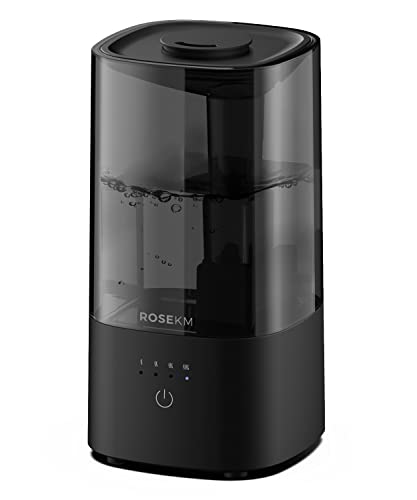
𝘾𝙤𝙣𝙩𝙞𝙣𝙪𝙤𝙪𝙨 𝙈𝙞𝙨𝙩 𝙛𝙤𝙧 𝘼𝙡𝙡-𝙉𝙞𝙜𝙝𝙩 𝙍𝙚𝙡𝙞𝙚𝙛: Boasts a 2.0L (0.53 gal) capacity, delivering up to 24 hours of mist on low and 10 hours on high with a powerful 200ml/h output. Ideal for combating dry skin, irritated sinuses, and poor sleep caused by dry indoor conditions, ensuring consistent comfort throughout the day.
Disadvantages of Filterless Humidifiers

Despite the advantages highlighted previously, filterless humidifiers present several notable disadvantages that warrant careful consideration. Mineral buildup can occur when these units emit “white dust,” potentially compromising air quality and increasing cleaning demands. Inconsistent humidity control raises the risk of over-humidification, leading to condensation and mold growth. Additionally, microbial exposure is a concern, as bacteria and mold can aerosolize if water tanks are not cleaned regularly, necessitating thorough weekly maintenance. Noise levels vary, with non-ultrasonic models producing persistent fan noise, while ultrasonic units might emit a hum. Although some models boast energy efficiency, others may consume more power during operation. Consequently, understanding these factors is essential for making an informed humidifier choice. Choosing a humidifier that incorporates safety features can help mitigate some of the concerns associated with filterless models.
How Filter-Based Humidifiers Work

Filter-based humidifiers operate through a systematic evaporative process designed to effectively increase indoor humidity levels. They utilize a wick or filter that absorbs water from a reservoir, providing a large surface area for the evaporation process. A fan pushes air through this moist filter, markedly speeding up evaporation. This results in cool, humidified air that is dispersed into the environment, enhancing comfort without raising room temperature. Filter efficiency is essential, as some filters are treated with electrostatic coatings for peak performance. Regular maintenance, including filter replacement, is necessary to prevent bacteria growth and guarantee continuous operation. Overall, these humidifiers are engineered for improved performance and cleaner moisture output in residential spaces. Additionally, like heated blankets with auto shut-off, filter-based humidifiers prioritize safety features to enhance user comfort.
Advantages of Filter-Based Humidifiers
The advantages of filter-based humidifiers are evident in several key areas, considerably impacting indoor air quality and user experience. These humidifiers effectively trap airborne particles, such as dust and pollen, leading to significant allergen reduction. As a result, users may experience fewer allergy symptoms, including nasal congestion. Moreover, by preventing the dispersion of contaminants and supporting cleaner moisture output, filter-based units contribute to various health benefits, particularly for individuals with respiratory issues like asthma. Their filtration systems also decrease mold growth potential and reduce maintenance needs, as filters capture impurities that would accumulate otherwise. Additionally, prolonged humidifier lifespan and operational efficiency result from minimized mineral buildup, making filter-based options a cost-effective and reliable choice for maintaining ideal humidity levels. Furthermore, H13 True HEPA filters are known for their effectiveness in capturing pollutants, which enhances the overall air quality in homes.
Recommended Products

Works with Honeywell Air Purifiers for Home: This HEPA Honeywell air purifier filter replacement is designed exclusively to fit HPA094, HPA100, HPA200, HPA250, HPA300, HPA3100, HPA3300, HPA5100, HPA5200, HPA5300, HPA8350 Series
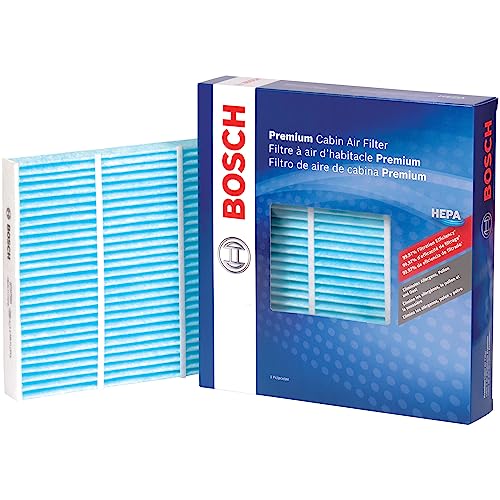
Bosch HEPA Premium Cabin Air Filters are designed and tested to meet High Efficiency Particulate Air (HEPA) standards based on ISO 29463-3:2011 and provide filtration efficiency of 99.97% at 0.3 microns

Genuine AUPU Replacement Filter: ONLY designed for AUPU “Air Purifier and Humidifier in One”. Opt for genuine filters to enjoy superior quality and an extended service life. It is recommended to replace the filter every 6 to 12 months.(The recommended replacement interval may vary based on actual usage.)
Disadvantages of Filter-Based Humidifiers
In considering the disadvantages of filter-based humidifiers, four main issues emerge: maintenance requirements, operational performance, hygiene and health risks, and cost implications. These humidifiers often face filter longevity concerns, as users must adhere to a filter replacement frequency that can be as short as every few weeks. This continual upkeep not only demands time but also translates to a higher long-term cost due to ongoing filter expenses. Additionally, inadequate maintenance can lead to bacteria and mold accumulation within damp filters, posing potential health risks. The operation of these units can be slower and noisier compared to their filterless counterparts, further complicating the user experience. Ultimately, these factors may deter some consumers from selecting filter-based models. Regular replacement of key components is essential during high-demand seasons for maintaining optimal performance.
Key Differences Between Filterless and Filter-Based Models
Humidifiers exhibit key operational differences which distinguish filterless models from their filter-based counterparts. Filter-based humidifiers utilize a wick or filter to absorb water, which a fan then blows through to disperse moisture levels effectively. They offer consistent humidity control, capturing minerals and impurities. In contrast, filterless humidifiers often employ ultrasonic technology, generating mist without fans, but may emit white dust if not using distilled water. Additionally, filterless units can release microorganisms more readily, increasing health risks. While filter-based humidifiers require periodic filter replacements, adding maintenance costs, filterless models simplify upkeep but necessitate vigilant cleaning to mitigate microbial contamination. These essential differences affect overall performance, air quality, and convenience across various humidifier types. Furthermore, proper humidity levels can promote respiratory health, making it crucial to choose the right humidifier type based on personal needs.
Recommended Products


Wi-Fi & App Connectivity: Stay connected and control your humidifier remotely
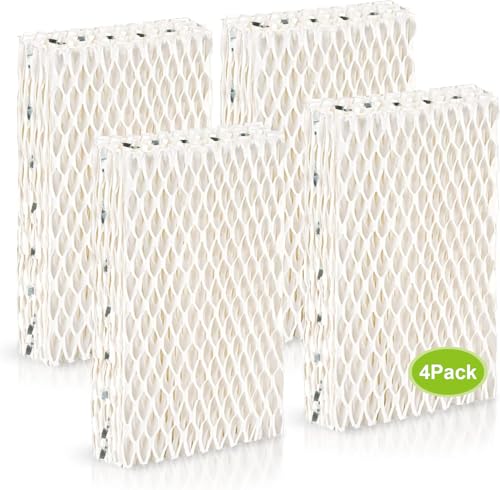
【Compatible Models】The WXFANA humidifier replacement filters are compatible with Kaz WF813; ReliOn WF813 RCM-832N; ProCare WF813 RWF13 PCWF813 PCWF-813 PCCM-832N PCCM-840; Equate EQWF813 EQ-2119-UL; Sesame Street SH100 & SH200; also compatible with Duracraft / Robitussin humidifier models DH-830, DH-832, AC-813, ACR-832, D13-C, HC-832.
Maintenance Tips for Filterless Humidifiers
Maintaining filterless humidifiers is crucial for sustaining optimal performance and guaranteeing a healthier indoor environment. Establishing consistent cleaning schedules is essential; users should empty the water tank daily to minimize microbial growth. Refilling with fresh water prevents stagnation, while wiping down all surfaces daily reduces dust and mineral buildup. For best water quality, using distilled or demineralized water slows mineral accumulation. Monthly descaling using undiluted white vinegar is recommended for heating elements and ultrasonic plates, with thorough rinsing to avoid chemical residue. Before long-term storage, perform a final deep cleaning and verify all parts are dry. Regular inspection for mold or unusual odors during maintenance helps guarantee safe operation and efficient humidity output throughout the year. Additionally, models with easy top-fill designs simplify the refilling process, making maintenance more convenient.
Maintenance Tips for Filter-Based Humidifiers
Effective maintenance of filter-based humidifiers is essential for ensuring ideal air quality and humidity levels in indoor environments. To maintain filter performance, filters should be replaced at least annually, or as recommended by the manufacturer. Regularly inspect filters for signs of mold or damage and replace them immediately if needed. Employ cleaning techniques such as using a mild white vinegar solution to clean water-contacting components every 3–7 days. This helps dissolve mineral deposits and prevent mold growth. At the start and end of the humidification season, conduct a full inspection and deep cleaning of the unit. Additionally, using distilled water can substantially reduce mineral buildup, further enhancing overall efficiency and air quality within the space. Regular cleaning is essential for optimal humidifier operation, helping to maintain a healthier home environment.
Choosing the Right Humidifier for Your Needs
Choosing the right humidifier can enhance indoor air quality and comfort in various living spaces. Consumers should consider their preferred humidity levels and specific room sizes when making a choice. Filter-based humidifiers, primarily using evaporative technology, are effective for larger areas due to their higher output and longer runtimes. In contrast, filterless ultrasonic models are ideal for medium-sized rooms, offering a quiet operation, often around 31-34 dB. Personal preferences also influence decisions; budget constraints may steer users toward cheaper filterless options, while those prioritizing air quality might opt for filter-based units. Additionally, considerations about maintenance and cleaning frequency are essential, as filterless models require regular cleaning to prevent bacterial buildup, while filter-based units need periodic filter replacements.
Health Considerations When Using Humidifiers
Humidifiers play a significant role in enhancing indoor air quality and contributing to various health benefits. They help relieve dry skin, ease respiratory issues, and prevent nosebleeds by maintaining ideal moisture levels. However, improper use can lead to health risks, such as mold and bacteria growth, especially in poorly maintained devices. Regular cleaning is important, and using distilled water can mitigate risks related to mineral dust. Monitoring humidity levels, ideally between 30% and 50%, is essential to avoid excessive moisture, which can worsen respiratory effects and cause conditions like “humidifier fever.” Additionally, adopting usage safety measures is crucial, particularly when children are present, to prevent potential steam burns or accidents associated with humidifier operation.
Conclusion: Making an Informed Choice
Making an informed choice between filterless and filter-based humidifiers requires careful consideration of various factors. Consumers should evaluate their humidity regulation strategies, factoring in maintenance requirements, costs, and performance. Filter-based units, while more labor-intensive due to regular filter replacements every 30-60 days, offer superior air quality by trapping allergens and bacteria. Filterless models, less costly initially, demand vigilance in cleaning to avoid microbial growth. User satisfaction feedback often highlights the convenience of filterless designs, but also notes increased noise and less effective humidification in larger spaces. Ultimately, potential users must balance operational costs, health implications, and noise levels to select a humidifier that aligns with their specific needs and lifestyle preferences.
Frequently Asked Questions
Can Filterless Humidifiers Help Alleviate Allergies and Asthma Symptoms?
Filterless humidifiers can provide asthma relief through added moisture, easing dryness and irritation. However, their effectiveness is limited as they do not capture airborne allergens, which can continue to trigger allergy symptoms. Regular maintenance is essential.
How Often Should I Clean My Filterless Humidifier?
A filterless humidifier should follow a cleaning schedule that includes cleaning every third day, daily emptying and refilling, and weekly deep cleans. Adhering to these maintenance tips helps prevent microbial growth and guarantees peak performance.
Are There Specific Brands Recommended for Filter-Based Humidifiers?
Top brands like Levoit and Honeywell consistently receive glowing consumer reviews for their filter-based humidifiers. Their effective designs and advanced features offer a seamless experience, ensuring ideal air quality while maintaining user convenience and comfort.
Do Filterless Humidifiers Waste More Energy Than Filter-Based Ones?
Filterless humidifiers typically exhibit higher energy efficiency compared to filter-based models. However, maintenance costs can impact performance, as neglected units may consume more energy, reducing overall efficiency compared to regularly maintained filterless options.
Can I Use Essential Oils in a Filterless Humidifier?
Surprisingly, many filterless humidifiers allow essential oils, enhancing humidifier safety. However, compatibility varies by model; hence, users should confirm features before use. Improper application can damage machines, creating operational issues and increasing maintenance concerns.


