As an Amazon Associate, we earn from qualifying purchases. Some links on this site are affiliate links at no extra cost to you. Our recommendations are based on thorough research and editorial judgment.

Preventing Pilling On Fleece Loungewear

To prevent pilling on fleece loungewear, sort garments separately and wash them inside out using gentle cycles with cold or lukewarm water. Employ mild detergents free from harsh chemicals and optical brighteners to maintain fiber quality. Avoid overstuffing the machine and limit wash duration to reduce mechanical stress. Additionally, low-temperature tumble drying can help minimize pill formation. Implement these practices to enhance the durability of fleece and maintain its appearance. More insights await on additional care strategies.
Key Takeaways
- Wash fleece loungewear inside out using gentle cycles with cold or lukewarm water to reduce surface damage and pilling risk.
- Use mild, fabric-friendly detergents to maintain fiber integrity and avoid harsh chemicals that weaken fleece fibers.
- Avoid overstuffing the washing machine to limit friction and mechanical stress during the wash cycle.
- Regularly brush fleece with natural bristles to maintain smoothness and reduce pilling over time.
- Opt for low-temperature tumble drying to diminish pill formation through gentle friction.
Understanding Fleece Fabric Characteristics
You may be interested


Fleece fabric, known for its warmth and softness, possesses distinctive characteristics that cater to a variety of loungewear applications. Common fleece types include microfleece, which is lightweight and breathable, and heavyweight fleece that offers maximum insulation. These fabrics often come in different fabric blends, combining polyester with natural fibers for enhanced durability and comfort. For instance, a 100% polyester fleece provides excellent moisture-wicking properties, while a cotton-polyester blend balances breathability with ease of care. Fleece typically weighs between 200 and 400 grams per square meter, influencing its thermal properties and suitability for various climates. Understanding these characteristics is essential for consumers aiming to choose the right fleece loungewear for their specific needs, ensuring both comfort and functionality. Additionally, selecting breathable materials can significantly enhance the overall comfort and longevity of loungewear.
Effective Laundry Techniques for Fleece
When caring for fleece loungewear, effective laundry techniques are vital to prolonging the life of the fabric and minimizing pilling. Fleece sorting is important; garments should be washed separately from heavier items to reduce abrasive friction. Additionally, it is advised to wash fleece inside out to prevent damage to its surface. Selecting gentle washing techniques, like delicate cycles with cold or lukewarm water, helps maintain fabric integrity. Overstuffing the washing machine should be avoided, as this can limit movement and increase fiber wear. Finally, short wash cycles minimize mechanical agitation, further reducing the risk of fiber breakage and pilling. By implementing these methods, the longevity and appearance of fleece loungewear can be greatly enhanced. Keeping in mind the importance of regular cleaning can also help maintain the fabric’s quality over time.
Choosing the Right Detergents and Chemicals
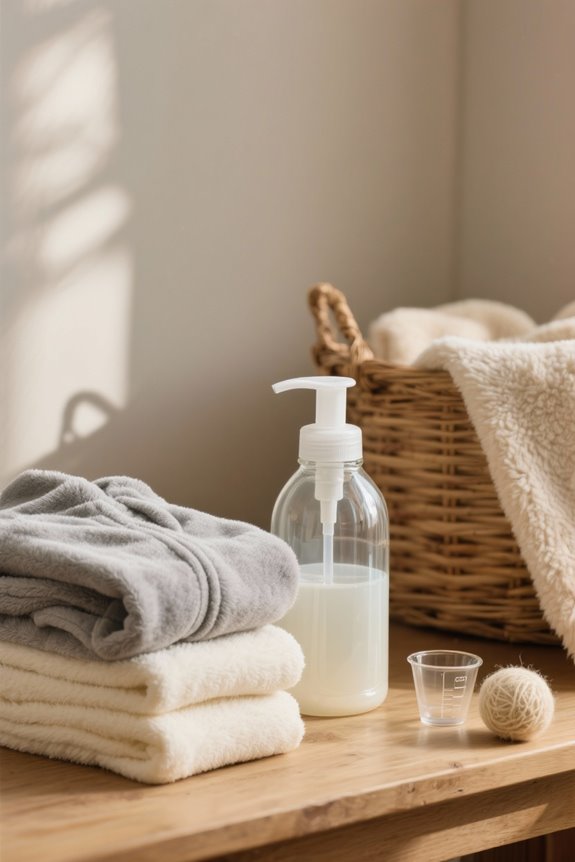
Proper care of fleece loungewear extends beyond effective laundry techniques; it also hinges on the selection of appropriate detergents and chemicals. Utilizing mild, fabric-friendly detergent types helps preserve fleece’s natural oils, minimizing softness loss and reducing pilling risk. Harsh detergents and bleach should be avoided, as they weaken fibers, making fleece more prone to wear. Enzymatic detergents containing cellulase enzymes can aid in breaking down fiber pills but should not be used with anti-pill treatments. Detergents free of optical brighteners and harsh chemicals maintain fiber integrity, while a near-neutral pH protects synthetic fibers from premature breakage. Finally, using minimal detergent and separating fleece loads from heavier fabrics mitigates abrasive chemical interactions, ensuring longevity. Additionally, opting for natural and eco-friendly options can further enhance the health of your fabrics while supporting sustainable practices.
Environmental and Usage Factors Impacting Pilling
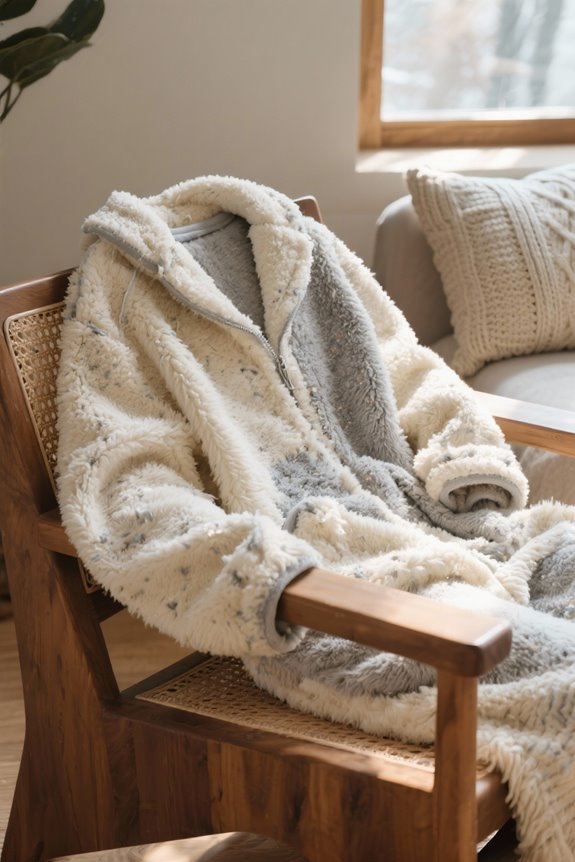
Environmental and usage factors play an essential role in influencing pilling on fleece loungewear. The durability of fleece is impacted by external elements such as laundering practices and chemical treatments. Washing in cold water and using gentle cycles can minimize mechanical stress, thereby aiding pilling prevention. Conversely, hot washes and abrasive fabrics like denim considerably increase pilling risk. Additionally, pilling treatments often involve petrochemicals that contribute to environmental hazards, including microplastic pollution. Manufacturing conditions also affect fleece durability, with lower quality fibers being more susceptible to pilling. Moreover, energy consumption during production and disposal can complicate sustainability efforts in the textile industry. Accordingly, mindful laundering and selecting high-quality fleece can enhance longevity and reduce environmental impact. A well-chosen wedge pillow can also improve comfort during relaxation, potentially reducing wear and tear on loungewear.
Methods for Pilling Removal and Maintenance
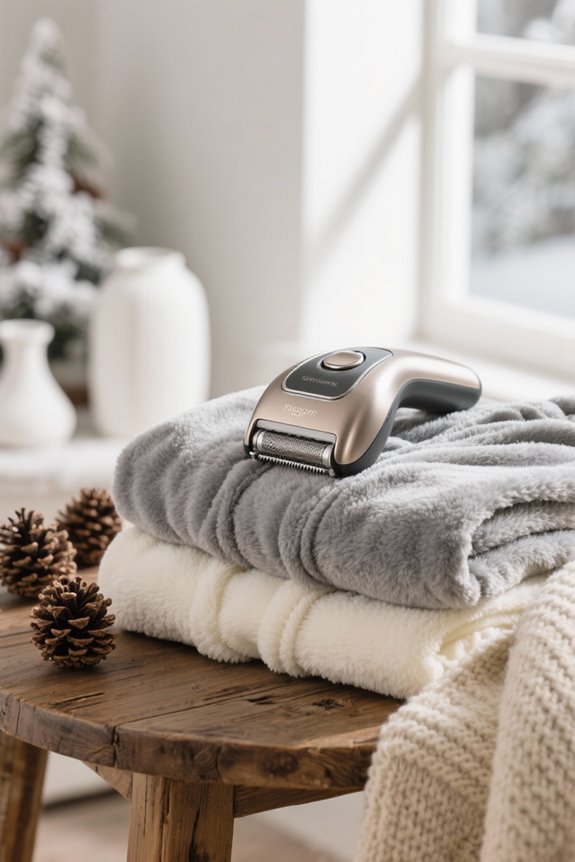
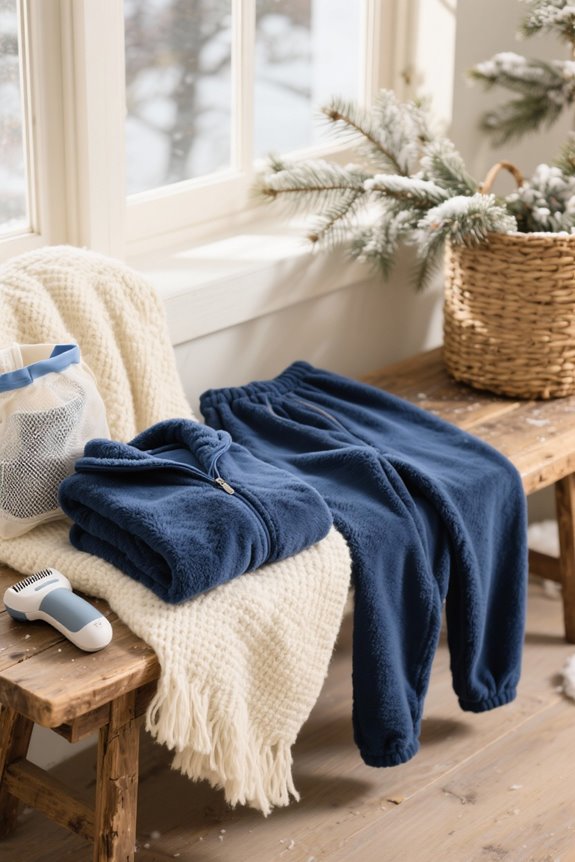
Maintaining fleece loungewear involves understanding effective methods for pilling removal and upkeep. Various mechanical methods include using a razor blade for delicate areas, fine tweezers for precise plucking, and a sweater comb for gentle lifting of pills. Electric fabric shavers provide quick, uniform results, greatly aiding pilling prevention. DIY tools such as pumice stones offer non-damaging fuzz capture, while clear packing tape lifts pills efficiently. Regularly brushing fabric with natural bristles can help maintain smoothness, reducing further pilling. Low-temperature tumble drying can also diminish pill formation through gentle friction. Additionally, investing in high-quality fabrics can further reduce the likelihood of pilling, ensuring a longer-lasting garment. Combining these techniques guarantees thorough fabric care, prolonging the life and appearance of fleece loungewear, and enhancing overall user satisfaction with their garments.
Alternative Strategies for Care and Longevity
When considering the longevity of fleece loungewear, various alternative strategies can greatly contribute to its care. Selecting high-quality garments made from tightly woven, pill-resistant fabrics, such as nylon, is essential. Additionally, garment rotation helps reduce wear by limiting the frequency of use on each piece. Incorporating fiber treatments, such as using mild detergents with cellulase enzymes, maintains fiber integrity and prevents pilling. Washing clothes inside out and utilizing mesh laundry bags further protect the fabric’s surface from abrasion. Air drying fleece garments flat on towels conserves their structure, while careful handling minimizes mechanical stress. Overall, these practices help maintain the aesthetic and functional quality of fleece loungewear, extending its lifespan considerably with proper attention. Furthermore, choosing soft and durable materials ensures that the garments remain comfortable while resisting wear over time.
Frequently Asked Questions
Can Fleece Be Recycled After It Starts Pilling?
Yes, fleece can still be recycled after pilling. Employing specialized fleece recycling methods allows for sustainable clothing options, transforming pilled fibers into new materials and promoting a circular economy by reducing textile waste and pollution.
Is Pilling a Sign of Low-Quality Fleece?
Pilling is not necessarily a sign of low-quality fleece; it often results from fiber blend and finishing methods. Effective pilling prevention strategies can enhance fleece quality considerably, making it a complex indicator of overall durability.
How Often Should I Wash My Fleece Loungewear?
Washing fleece loungewear frequently maintains freshness and fabric care. Ideally, it should be washed upon visible dirt or odors, while more regular laundry frequency is suggested for daily use or exposure to specific conditions.
Can I Use a Dryer on Fleece Garments?
Fleece garments can safely be dried in a dryer; studies show a low heat setting greatly reduces fabric stress. Adhering to recommended dryer settings is essential for ideal fleece care and preserving garment integrity long-term.
Does Wool Fleece Pill Less Than Synthetic Fleece?
Wool fleece generally pills less than synthetic fleece due to its longer, finer fibers, presenting wool advantages. In a fleece comparison, wool’s natural properties often contribute to reduced pilling and longevity compared to standard synthetic options.