As an Amazon Associate, we earn from qualifying purchases. Some links on this site are affiliate links at no extra cost to you. Our recommendations are based on thorough research and editorial judgment.


Air Purifiers And Mold Spores: What They Can Remove

Air purifiers equipped with HEPA filters can remove at least 99.97% of airborne mold spores as small as 0.3 microns. These filters effectively capture spores through mechanisms like impaction and diffusion. Advanced models, such as the Coway Airmega or NuWave OxyPure, offer multiple stages of filtration to enhance efficiency. However, air purifiers alone cannot eliminate surface mold or control moisture, which are critical for mold prevention. Understanding these capabilities can guide effective mold management strategies.
Key Takeaways
- Air purifiers with HEPA filters can capture at least 99.97% of mold spores, significantly reducing airborne mold concentrations.
- Specialized filters, such as Germ Defense by Rabbit Air, specifically target and break down mold spores.
- Advanced features like air quality sensors help monitor and maintain optimal indoor conditions for mold prevention.
- Air purifiers improve indoor air quality but cannot eliminate mold growing on surfaces or control moisture levels.
- Utilizing air purifiers alongside moisture control practices is essential for effective mold management and prevention.
Understanding HEPA Filter Efficiency on Mold Spores
You may be interested


HEPA filter efficiency plays a critical role in managing mold spores in indoor environments. Mold spores typically range from 2 to 20 microns in diameter, which is within the HEPA filter’s effective capture range. True HEPA filters capture at least 99.97% of particles as small as 0.3 microns, making them particularly efficient against airborne mold spores. Studies indicate that some HEPA filters can achieve up to 99.99% efficiency when utilized properly. The filters employ three mechanisms—impaction, diffusion, and interception—to trap mold spores, immobilizing them and preventing their re-release. This capture process greatly disrupts the mold lifecycle, as airborne spores are effectively eliminated from circulation. By improving indoor air quality, HEPA filtration reduces mold growth potential in various settings, enhancing occupants’ health. Additionally, models incorporating UV-C technology can further enhance the elimination of airborne mold spores and other pathogens, providing an extra layer of protection.
Recommended Products

MOOKA B-D02L AIR PURIFIER FOR LARGE ROOM: With the high-efficiency filtration system, the air purifier covers an area up to 1076 ft². 6 air changes per hour in 215 ft², 1 air changes per hour in 1076 ft². Modern design fits in any space from small to large rooms, bedrooms, living rooms, offices, nurseries, kitchens and basements. Perfect for pet owners, babies, children, the elderly, or anyone wanting to improve the air quality

CAPTURES 99.97% OF ALLERGENS AND PARTICULATES* AND 99.9% OF VIRUSES AND BACTERIA.** With the Clorox Air Purifier, you can breathe easier. It has true HEPA filtration to capture 99.97%* of particles as small as 0.1 microns and 2 additional filters to capture larger particles and odors.

Effective Air Circulation Rate: this home air purifier can circulating air in twice per hour in a room measuring 323 ft² (30 m²), ensuring effective purification throughout the space
Types of Filtration Technologies Effective Against Mold
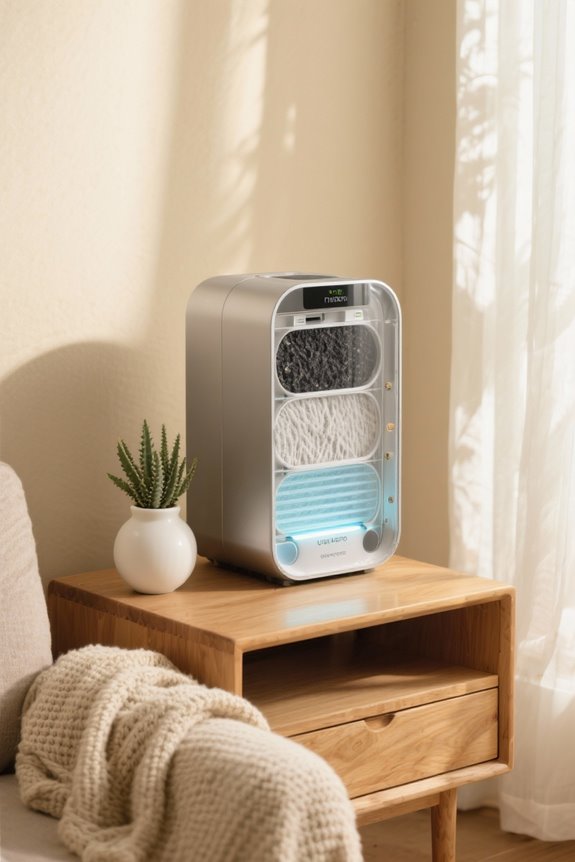
Effective air purification technologies play an essential role in managing mold spores and improving indoor air quality. High Efficiency Particulate Air (HEPA) filtration captures 99.97% of particles as small as 0.3 microns, addressing most mold spore characteristics effectively. Photo Electrochemical Oxidation (PECO) technology further reduces mold spores by breaking them down at a molecular level. While activated carbon filters absorb odors and VOCs, their effectiveness against mold spore removal is limited. Ion-generating filters can reduce airborne particles but are less efficient than HEPA systems. Customized filters, like the Germ Defense by Rabbit Air, are designed specifically to trap mold spores. A filtration technologies comparison reveals that HEPA and PECO systems are the most effective options for maintaining healthier indoor environments. Additionally, HEPA filters are crucial for capturing allergens in homes, making them an essential feature for those sensitive to mold.
Recommended Products

𝐀𝐇𝐀𝐌 𝐕𝐞𝐫𝐢𝐟𝐢𝐞𝐝 & 𝐇𝐢𝐠𝐡 𝐂𝐀𝐃𝐑 𝐕𝐚𝐥𝐮𝐞: Certified by the Association of Home Appliance Manufacturers, this air purifier provides reliable performance with a Smoke/Dust/PM2.5 CADR of 226 CFM (384 m³/h) and a Pollen CADR of 244 CFM (415 m³/h). AHAM certification guarantees effective, high-speed air purification for your home.
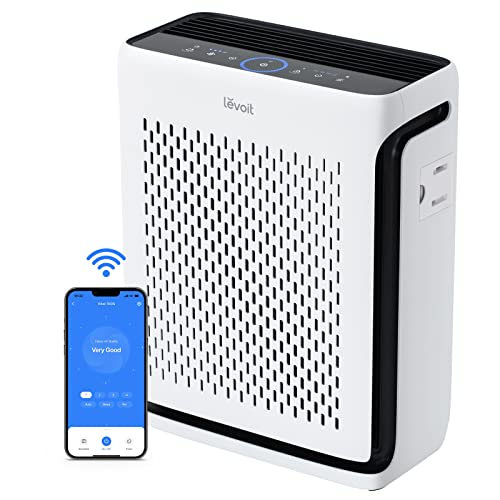
𝐖𝐇𝐘 𝐂𝐇𝐎𝐎𝐒𝐄 𝐀𝐇𝐀𝐌 𝐕𝐄𝐑𝐈𝐅𝐈𝐃𝐄 𝐀𝐈𝐑 𝐏𝐔𝐑𝐈𝐅𝐈𝐄𝐑𝐒: AHAM (Association of Home Appliance Manufacturers) is an ANSI-accredited organization that sets strict standards for appliance performance. Air purifiers with the AHAM VERIFIDE seal have been independently tested for air cleaning performance and energy efficiency. When you choose an AHAM certified air purifier, you're choosing a product trusted for reliable and effective indoor air quality improvement
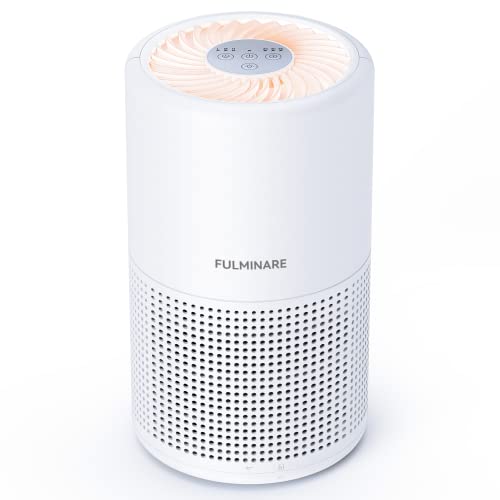
Efficient Particle Filtration: FULMINARE air purifier uses an H13 HEPA filter. Simply turn it on and maintain a clean and peaceful environment and give families health.
Optimal Air Purifier Models for Mold Removal

Numerous air purifiers are designed to combat mold spores effectively, each offering distinct features that enhance indoor air quality. Top air purifiers like the Coway Airmega ProX utilize a four-stage filtration system, which efficiently filters mold spores in larger areas. The NuWave OxyPure incorporates a five-stage filtration system with washable filters, ideal for maintaining mold effectiveness over time. For smaller spaces, the Coway Airmega 150 employs a three-stage system to capture mold particles. Additionally, the Oransi TrueCarbon blends HEPA filtration with activated carbon, addressing both mold and odor issues. Each model’s Clean Air Delivery Rate (CADR) matches specific room sizes, ensuring peak air purification throughout the space. Regular maintenance further enhances overall effectiveness. These models often feature high CADR ratings that indicate their efficiency in removing airborne pollutants, including mold spores.
Recommended Products

𝐇𝐢𝐠𝐡𝐞𝐫 𝐀𝐢𝐫 𝐈𝐧𝐭𝐚𝐤𝐞 & 𝐋𝐚𝐫𝐠𝐞𝐫 𝐂𝐨𝐯𝐞𝐫𝐚𝐠𝐞 𝐟𝐨𝐫 𝐏𝐞𝐭 𝐋𝐨𝐯𝐞𝐫𝐬: This air purifier for home pets is designed with a larger front air inlet and wider dual-side air inlet. Compared to the single air inlet design, it can trap airborne pet hairs and odors more easily. This air purifier for large room can clean up to 2200 ft² per hour

4-in-1 filter includes pre-filter layer and a combination of an activated carbon and high efficiency filter for 99 % of 0.1 micron particles or larger on sleep mode including pollen dust smoke and dander

Ideal for allergy sufferers and pet owners: The H13 HEPA filter utilizes a combination of three filters to maximize clean air. The outer filter filters hair, pet dander and other large particles, and the HEPA filter in the middle filters small particles in the air, which can remove 99.97% of harmful air pollutants, smoke, pollen, dust, etc. The inner activated carbon filter layer can remove the odor in the air.
Exploring Mold Growth and Prevention Tactics

Mold growth poses notable challenges in indoor environments, often thriving under specific conditions that can be easily managed. To implement effective mold prevention strategies, it is essential to control moisture levels. Keeping indoor humidity between 30-50% can greatly reduce mold risk, as levels above 60% promote growth. Moisture control techniques include promptly drying wet materials within 24-48 hours, repairing roof gutters, and venting appliances outdoors to minimize indoor humidity. Running exhaust fans during activities like cooking and showering can also expel excess moisture. Regular maintenance of HVAC systems guarantees proper airflow, while the use of dehumidifiers in damp areas will further hinder mold proliferation. Together, these measures can create a healthier indoor environment, making mold less likely to establish. Additionally, incorporating antimicrobial humidifiers can further enhance air quality by inhibiting bacteria and mold growth.
Limitations of Air Purifiers in Mold Management
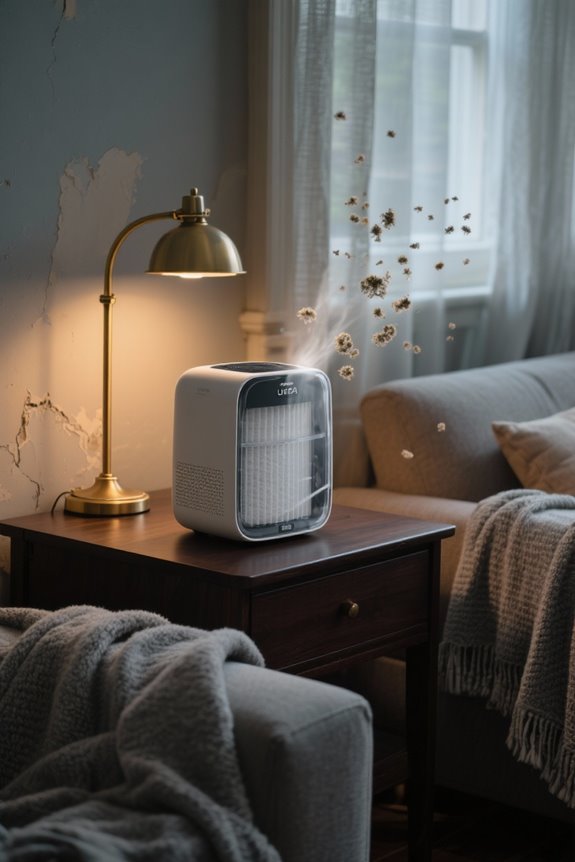
Air purifiers serve as a widely used tool in indoor air quality management, yet they possess significant limitations in effectively controlling mold issues. While they can capture up to 99.97% of airborne mold spores via HEPA filters, air purifiers do not eliminate mold growing on surfaces or manage moisture control. Mold thrives in damp environments; without addressing humidity, mold will persist and spread, continuously releasing spores. Additionally, hidden mold colonies in walls or HVAC systems remain inaccessible to purification efforts. Relying solely on air purifiers neglects essential steps like fixing leaks or improving ventilation. Consequently, effective mold management requires a combination of physical remediation, moisture control measures, and the supplemental use of air purifiers to enhance air circulation and air quality. Furthermore, maintaining optimal performance of air purifiers, including regular maintenance and filter replacements, is crucial to ensuring they function effectively in reducing airborne spores.
Health Benefits Associated With Mold Exposure Reduction
Reducing exposure to mold can lead to significant health benefits, particularly for individuals with respiratory conditions. Lower mold exposure has been associated with a reduction in asthma symptoms, providing relief for those prone to attacks. Additionally, fewer allergic reactions may occur, leading to decreased incidences of sneezing, runny noses, and itchy eyes. Improved bronchial health occurs as inflammation in the lungs diminishes. Furthermore, cognitive functions may benefit; reduced mold exposure is linked to decreased cognitive impairments and improved reaction times. Immune systems also gain support, as lower mold levels lessen unnecessary activation. These cumulative health impacts illustrate how reducing mold exposure enhances overall well-being, contributing to both physical and mental health improvements in affected individuals. Utilizing air purifiers with HEPA filters can significantly aid in lowering mold spore concentrations in indoor environments.
The Role of Air Purifiers in Remediation Efforts
Effective mold remediation strategies incorporate various tools, with air purifiers serving an essential supplementary role. These devices enhance indoor air quality by reducing airborne mold spore concentrations, particularly in high-risk areas like basements and bathrooms. Equipped with HEPA filters, they capture up to 99.97% of particles as small as 0.3 microns, efficiently trapping mold spores measuring between 1 and 20 microns. While air purifiers excel at lowering spore levels, they do not eliminate mold from surfaces or hidden locations. Moisture control remains crucial, as unresolved dampness will continue to foster mold growth. For ideal effectiveness, air purifiers should operate continuously, complemented by professional remediation efforts that address mold sources directly and incorporate thorough moisture management measures. Additionally, using essential oils known for their antimicrobial properties can further enhance air quality and provide a pleasant aroma.
Essential Features to Look for in Air Purifiers
When selecting an air purifier, key features should be carefully considered to assure peak performance against mold spores and other airborne pollutants. True HEPA filters are essential, capturing 99.97% of particles as small as 0.3 microns, effectively removing mold spores. Multi-stage filtration systems enhance overall effectiveness by combining HEPA filters with activated carbon, which absorbs odors and VOCs. Filter lifespan and energy efficiency are also important; look for models with long-lasting filters and low energy consumption. The Clean Air Delivery Rate (CADR) indicates performance in specific room sizes, with higher values being preferable for larger areas. Smart features, such as air quality sensors, can optimize usage and assure timely maintenance for sustained air quality improvement. Additionally, consider air purifiers with Multi-stage filtration systems that not only target mold spores but also effectively capture allergens and pollutants for a healthier indoor environment.
Recommended Products

AIR PURIFIER FOR HOME: Circulates and filters air in a small bedroom (153 sq. ft.) every 12.5 minutes and large spaces (743 sq. ft.) every hour. The activated carbon filter...
Best Practices for Using Air Purifiers Against Mold
To effectively combat mold spores, it is essential to implement best practices when using air purifiers. Ideal air purifier placement is vital; devices should be located in areas with high moisture and mold risk, such as bathrooms and kitchens. Operating air purifiers continuously, especially in damp environments, greatly enhances their effectiveness. For maximum efficiency, choose a model that suits the room size, matching it to its Clean Air Delivery Rate (CADR). Maintenance frequency is equally important; HEPA filters should be replaced or cleaned according to the manufacturer’s instructions, typically every 6 to 12 months. Regularly inspecting filters helps prevent airborne spores from circulating. Combining these practices creates a proactive approach to reducing mold spores indoors. Additionally, selecting an air purifier with washable filters can help minimize long-term maintenance costs while ensuring optimal air quality.
Monitoring Indoor Air Quality for Mold Management
Monitoring indoor air quality plays an important role in effective mold management, complementing the use of air purifiers. Regular air sampling, including spore traps and surface sampling, identifies mold presence and concentration. Humidity control is crucial, as mold thrives in environments exceeding 60% relative humidity. Consequently, utilizing smart sensors can help track humidity levels in real-time, providing timely alerts. Additionally, indoor ventilation is essential; poor airflow often leads to moisture buildup, increasing mold risk. Air quality monitors, while capable of tracking particulate matter, may need to address mold specifically. Visual inspections for dampness and musty odors enhance detection strategies. Together, these methods facilitate proactive mold management, ensuring a healthier living environment. Moreover, incorporating advanced features like air quality sensors in air purifiers enhances their effectiveness in mold prevention.
Frequently Asked Questions
Can Air Purifiers Work Without HEPA Filters?
Air purifiers can function without HEPA filters by utilizing filter alternatives like activated carbon or electrostatic precipitators. However, their effectiveness in improving air quality and capturing particles, especially ultrafine ones, is generally reduced.
How Often Should I Change the Filters in My Air Purifier?
Like a gardener tending to blooms, regular filter maintenance guarantees an air purifier thrives. Typically, HEPA filters require changing every 6–12 months, while usage patterns can greatly impact overall filter lifespan and performance.
Do Air Purifiers Consume a Lot of Electricity?
Air purifiers generally consume modest electricity, ranging from 10 to 250 watts. Energy efficiency varies by model and settings, influencing operational costs. Most users find expenses manageable while benefiting from improved indoor air quality.
Are There Any Side Effects From Using Air Purifiers?
Air purifiers, while marketed as health saviors, sometimes gift users with respiratory irritations and chemical emissions instead. Apparently, breathing cleaner air may come bundled with uninvited side effects and surprising health concerns lurking nearby.
Can Air Purifiers Eliminate Musty Odors Caused by Mold?
Air purifiers contribute to musty odor removal by capturing airborne mold spores, yet they cannot eliminate existing odors from established mold growth. Effective mold spore reduction is best achieved alongside proper moisture management and remediation efforts.


