As an Amazon Associate, we earn from qualifying purchases. Some links on this site are affiliate links at no extra cost to you. Our recommendations are based on thorough research and editorial judgment.


True HEPA Vs HEPA Type Filters: What To Know

True HEPA filters capture at least 99.97% of 0.3-micron particles, making them superior to HEPA-type filters, which generally capture only around 99% of larger particles. True HEPA filters utilize dense fiberglass fibers for effective filtration, while HEPA-type filters often use coarser materials that may degrade over time. True HEPA filters are critical in healthcare and industrial settings to guarantee high air quality. Understanding these differences can help consumers make informed choices about air purification options and their effectiveness.
Key Takeaways
- True HEPA filters capture at least 99.97% of particles at 0.3 microns, while HEPA-type filters capture around 99% or less, primarily above 2.5 microns.
- Construction of True HEPA filters uses dense fiberglass for durability, whereas HEPA-type filters often utilize coarser, less effective synthetic fibers.
- True HEPA filters are essential in environments like healthcare and airplanes, where high air quality is critical for safety.
- Many products labeled as “True HEPA” may not have verified certification, leading to potential consumer confusion about their effectiveness.
- To ensure quality, consumers should seek specific performance metrics that comply with HEPA standards when choosing air purifiers.
Definition and Standards of HEPA Filters
You may be interested


When discussing air filtration, HEPA filters represent a well-defined standard that guarantees a high level of performance. HEPA stands for “High Efficiency Particulate Air” and refers to a filter classification that must meet specific regulatory standards. To be labeled as “True HEPA,” a filter must capture at least 99.97% of airborne particles measuring 0.3 microns in diameter, the most penetrating particle size. These filters consist of pleated fiberglass fibers, optimizing particle capture through mechanical means. The United States Department of Energy established these standards, requiring rigorous factory testing under protocols like IEST-RP-CC001. Filters not meeting these criteria may be misleadingly marketed as “HEPA-type,” lacking the certified performance of actual HEPA filters, which are essential for applications demanding high air quality. Additionally, HEPA filters’ effectiveness significantly reduces allergy symptoms by capturing fine particles such as pollen and pet dander.
Filtration Efficiency and Particle Size Comparison

Filtration efficiency varies markedly between True HEPA and HEPA-type filters. True HEPA filters, meeting rigorous filtration standards, capture at least 99.97% of particles at 0.3 microns, including fine allergens and pollutants. In contrast, HEPA-type filters often capture around 99% or less, primarily targeting larger particles above 2.5 microns. This significant difference in particle capture means that true HEPA filters excel in environments requiring high air quality. While true HEPA filters perform consistently well, even improving efficiency for smaller particles, HEPA-type variants tend to lack the same reliability. Their unverified claims can lead to diminished performance over time, making a clear distinction in filtration capabilities essential for peak indoor air quality. Additionally, air purifiers equipped with True HEPA filters are particularly effective in reducing airborne viruses, enhancing overall health benefits.
Recommended Products

Advanced HyperHEPA Filtration: Designed to remove and trap 99.995% of all airborne particles down to 0.003 microns, the Atem X supplies unequaled protection against dust, pollen, pet dander, smoke from wildfires, and more. True HEPA filtration

One Dri-Eaz HEPA 700 Air Scrubber with Optional Activated Carbon Filter, 700 CFM, large room air purifier

ADVANCED HYPERHEPA FILTRATION - Designed to remove and trap 99.995% of all airborne particles down to 0.003 microns, the HealthPro Plus XE provides unequaled protection against dust, pollen, pet dander, smoke from wildfires, and more. True HEPA filtration. Perfect for spaces up to 1125 sq ft.
Construction Materials and Build Quality Differences

True HEPA filters exhibit superior construction and material quality compared to their HEPA-type counterparts, largely due to strict regulatory standards. These filters utilize dense fibers such as fiberglass or advanced synthetic materials, ensuring high material integrity. The arrangement of fibers in True HEPA filters creates a complex maze that effectively traps micron-sized particles. In contrast, HEPA-type filters often incorporate coarser, less durable synthetic fibers, compromising filtration efficiency. Additionally, True HEPA filters feature robust construction designed to resist bending, enhancing build durability. They are pleated to maximize surface area while maintaining structural integrity, unlike thinner HEPA-type filters, which can collapse under airflow. The difference in manufacturing standards underscores the long-term reliability and performance of True HEPA filters compared to their alternatives. Furthermore, the effectiveness of HEPA filters in capturing pollutants is a critical factor for maintaining good indoor air quality.
Recommended Products

HUMIDIFIER: Auto Mode monitors air quality and adjusts air purification and humidity levels.

COMMERCIAL GRADE AIR PURIFIERS - Portable filtration system that filters out airborne particles including asbestos, pet dander, dust, pollen, drywall dust, wood dust, and other miscellaneous debris.

99.97% 5-Stage Filtration: Features a powerful combination of accordion pleated pre-filter, medium + high-efficiency filters, ultra-dense carbon mesh, and a true HEPA filter, removing even the finest fumes and particles.
Applications and Use Cases for Different HEPA Filters

Air quality improvement is a vital concern across various sectors, leading to a diverse range of applications for both HEPA and HEPA-type filters. In healthcare settings, true HEPA filters, which capture at least 99.97% of particles as small as 0.3 microns, are necessary for maintaining sterile environments. Commercial airplanes utilize these filters to guarantee passenger safety against airborne pathogens. Public buildings increasingly deploy true HEPA systems to enhance indoor air quality. In industrial applications, true HEPA filters protect workers from hazardous particulates, while HEPA-type filters are suitable for less sensitive environments. Residentially, true HEPA filters improve air quality for allergy sufferers, highlighting the varied filter applications and usage examples across different contexts. Proper maintenance remains vital for peak performance. Additionally, the integration of UV-C light technology in air purifiers enhances their effectiveness in targeting airborne pathogens.
Recommended Products

4-Stage Filtration: Abestorm hepa air scrubber is with 4 stage filteration which which can remove smoke, dust, pet dander, pollen, saw dust, and other miscellaneous debris. Commercial air scrubbers has a built-in Pre-Filter, True HEPA Filter/Activated Carbon Filter, which will help to stop the large particles first.

UV-C Light Technology, Odor Elimination: Compared with ordinary air scrubbers, adapts advanced technology, built-in UV-C light, this air scrubber ensures the elimination of airborne pollutants. The air scrubber machine combines UV-C light technology and efficient filters, decomposing remaining odor molecules caused by smoking, cooking, and pets.

PATENTED TECHNOLOGY — Patented Silverscreen technology utilizes TiO2 media and UV light that attacks viruses, harmful gases, and VOC's that True HEPA and carbon filters cannot capture*.
Marketing and Labeling Confusion in HEPA Products

How often do consumers find themselves puzzled by the various claims surrounding HEPA filters? The marketing terminology used can be confusing. Terms like “True HEPA,” “HEPA-type,” and “HEPA-like” may mislead consumers, as there is no regulatory body verifying these claims. Such inconsistency impacts consumer perception, often leading to challenges in brand comparison. Many filters advertised as “True HEPA” might lack the certification needed to guarantee their efficacy. Consumers should seek specific performance metrics, such as claims of capturing 99.97% of particles at 0.3 microns, which align with established HEPA standards. Additionally, understanding the role of filtration systems can help consumers make more informed decisions when selecting air purifiers. Filtering through the marketing jargon, recognizing certified products can provide reassurance and clarity in choosing effective air purification solutions, thereby enhancing the overall consumer experience.
Recommended Products
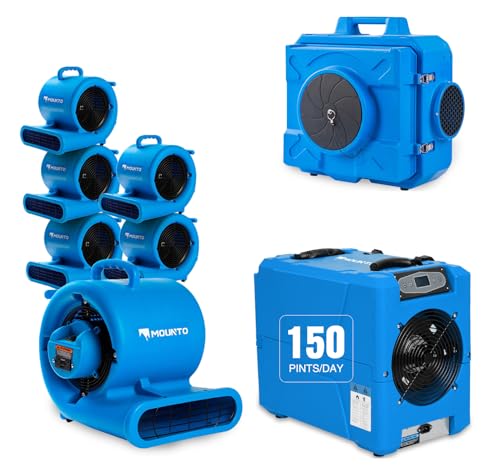
This is a combo package Deals of 6pcs 1/3hp Air Mover , 1pcs 500 Hepa 500 Air Scrubber, 1pcs 80pints Compact LGR Dehumidifier

5-pack filter replacement bundle: Genuine replacement filters from IQAir! Designed for our advanced HealthPro Plus room air purifiers, this 5-pack 3-in-1 IQAir filter bundle includes three long-lasting replacement filters: PreMax Pre-Filter, V5-Cell Gas and Odor Control Filter, and HyperHEPA Filter.

SALON AIR EXTRACTION: Most artificial nail products, and the activities involved in applying them, create vapors. These odors, for nail technicians and are known to irritate the nose, throat, eyes, or skin. The Extract-All Salon Pure Air Revolution effectively removes submicron particulates and heavy chemical vapors, keeping your salon's indoor air better.
Health Impact and Effectiveness of True HEPA Filters
The health impact of True HEPA filters is significant, especially for individuals with respiratory conditions. True HEPA filters capture at least 99.97% of airborne particles 0.3 microns or larger, which includes allergens like dust mites, pollen, and mold spores. This efficiency leads to considerable respiratory benefits, such as reduced asthma attacks and improved breathing quality in both homes and schools. Additionally, filtering fine particles, including PM2.5, mitigates exposure to urban pollution, lowering cardiovascular risks. True HEPA filters also aid in reducing the presence of viruses and bacteria in indoor air, further supporting respiratory health. Overall, these filters substantially enhance indoor air quality, making them essential for sensitive populations. Moreover, models like the HAP603 Air Purifier utilize advanced filtration systems that further improve air cleanliness.
Recommended Products

✔ 𝐓𝐑𝐔𝐄 𝐇𝟏𝟑 𝐇𝐄𝐏𝐀 𝐀𝐈𝐑 𝐏𝐔𝐑𝐈𝐅𝐈𝐄𝐑 𝐅𝐎𝐑 𝐀𝐋𝐋𝐄𝐑𝐆𝐈𝐄𝐒 & 𝐅𝐈𝐍𝐄 𝐏𝐀𝐑𝐓𝐈𝐂𝐋𝐄𝐒: This H13 HEPA air purifier captures 99.97% of airborne particles ≥0.3 µm and effectively traps ultra-fine particles down to 0.07 µm through diffusion. Removes PM2.5, dust, pollen, mold spores, and fine particulate pollution for consistently clean indoor air.

✔ 𝐓𝐑𝐔𝐄 𝐇𝟏𝟑 𝐇𝐄𝐏𝐀 𝐀𝐈𝐑 𝐏𝐔𝐑𝐈𝐅𝐈𝐄𝐑 𝐅𝐎𝐑 𝐏𝐀𝐑𝐓𝐈𝐂𝐋𝐄𝐒 & 𝐀𝐋𝐋𝐄𝐑𝐆𝐄𝐍𝐒: Equipped with a True H13 HEPA filter, this HEPA air purifier captures 99.97% of airborne particles ≥0.3 µm and effectively traps ultra-fine particles down to 0.07 µm through diffusion. Removes PM2.5, dust, pollen, mold spores, and fine particulate pollution.

Effectively cleans air of a large space in your home or office up to 512 sq. ft. for a fresher, cleaner atmosphere
Frequently Asked Questions
How Long Do True HEPA Filters Typically Last?
True HEPA filters typically last between 6 to 12 months, with proper HEPA maintenance potentially extending longevity up to 5 years, depending on usage and air quality conditions in their environment.
Can Hepa-Type Filters Be Recycled?
HEPA-type filters often face limited recycling options due to material composition and contamination risks. Proper filter disposal usually involves sealing filters and discarding them as regular waste when recycling isn’t feasible or available.
Are True HEPA Filters Safe for Pets?
True HEPA filters are safe for pets, providing effective allergen control without emitting harmful ozone. They improve air quality and protect sensitive respiratory systems, benefiting pet safety while reducing exposure to allergens and irritants.
How Often Should I Replace HEPA Filters?
HEPA filters should be replaced based on performance rather than a fixed schedule. Regular filter maintenance optimizes air quality, enhancing health benefits. Observing pressure drop and contamination levels is essential for determining the right replacement interval.
Do True HEPA Filters Eliminate Odors?
True HEPA filters do not eliminate odors due to limited filtration efficiency for gaseous molecules. For effective odor removal, additional filtration media, such as activated carbon, is required to address gaseous contaminants effectively.


