As an Amazon Associate, we earn from qualifying purchases. Some links on this site are affiliate links at no extra cost to you. Our recommendations are based on thorough research and editorial judgment.


What Makes Loungewear Breathable And Comfortable

Loungewear is breathable and comfortable mainly due to fabric selection. Natural fibers like cotton, bamboo, and silk offer superior breathability and moisture absorption, keeping skin dry. Fabrics under 150 GSM enhance airflow; heavier fabrics can restrict movement and comfort. Additionally, moisture-wicking technologies and open weaves improve air circulation. For sensitive skin, hypoallergenic options are ideal, while sustainable materials, such as TENCEL™ Lyocell, promote environmental responsibility. Exploring innovative fabric technologies can further enhance loungewear comfort.
Key Takeaways
- Breathable materials like cotton and bamboo promote airflow, preventing overheating and enhancing comfort during wear.
- Moisture-wicking fabrics effectively pull sweat away from the skin, keeping the wearer dry and fresh.
- Natural fibers, such as organic cotton and silk, offer softness and hypoallergenic qualities, making loungewear gentle on the skin.
- Lightweight fabrics (under 150 GSM) improve airflow and moisture evaporation, ensuring a comfortable experience in various conditions.
- Blended fabrics with spandex allow for stretch without sacrificing breathability, enhancing overall comfort during movement.
Importance of Fabric Selection in Loungewear
You may be interested


The selection of fabric plays an essential role in the construction of loungewear, influencing both comfort and functionality. Choosing fabrics with superior properties enhances the wearability of loungewear, aligning with current trends. Breathable materials, such as cotton and bamboo, allow for airflow, preventing overheating. Moisture management, particularly in fabrics like modal, keeps the wearer dry. Softness is critical for skin comfort, fostering relaxation during use. Durability guarantees that loungewear withstands repeated wear and laundering, maintaining its appeal over time. Additionally, elegant textures such as silk or cashmere elevate the aesthetic, blending luxury with practicality. These factors collectively drive the evolving loungewear trends, emphasizing a balance between comfort and style, suitable for various settings. Furthermore, selecting fabrics like bamboo rayon can enhance breathability and overall comfort.
Natural Fibers and Their Benefits

Natural fibers, such as cotton, wool, and Tencel, offer significant advantages in loungewear due to their inherent properties. These natural fabric properties facilitate superior breathability, allowing for improved air circulation. This means that moisture is efficiently absorbed and evaporated, keeping the skin dry and comfortable. Additionally, the porous structure of these fibers helps regulate body temperature by dissipating heat, which is essential during low-activity periods. Natural fiber advantages extend to softness and hypoallergenic qualities, minimizing skin irritation and enhancing overall wear comfort. For example, 84% of consumers report cotton as the most comfortable fabric. Blending natural fibers with materials like spandex can provide stretch without compromising breathability, making them ideal for versatile loungewear designs. Furthermore, the quality of materials often emphasized in consumer reviews contributes to the overall comfort of loungewear.
Moisture Management for Enhanced Comfort

Moisture management plays an essential role in enhancing comfort within loungewear. Effective moisture absorption is imperative, as fabrics like polyester blends and bamboo utilize moisture-wicking technologies to pull sweat away from the skin. These fabrics feature a combination of hydrophobic and hydrophilic fibers that facilitate efficient moisture transport. Quick drying is another essential characteristic, allowing perspiration to evaporate rapidly, thereby maintaining dryness during extended wear. Open weaves or mesh panels improve air circulation, further assisting in this process. Additionally, antimicrobial treatments in certain fabrics inhibit odor-causing bacteria, ensuring freshness for longer periods. By combining durability and comfort, modern moisture management fabrics like Coolmax® and Dri-QWick provide an effective solution for loungewear enthusiasts. Furthermore, organic cotton’s breathable designs contribute significantly to overall comfort, making it a popular choice for loungewear.
Heat Regulation in Breathable Fabrics

While loungewear is often associated with leisurely comfort, heat regulation in breathable fabrics greatly enhances wearability across varied environments. Phase Change Materials (PCMs) effectively absorb and release heat, utilizing wax microcapsules to maintain a stable microclimate near the skin. These materials can reduce perspiration by nearly 50%, preventing overheating. Electro-responsive technologies are also emerging, integrating nano-layered structures that actively pump moisture outward, cooling the skin by over 10°C. This combination of PCMs and electro-responsive methods allows for on-demand cooling, considerably improving comfort during fluctuating temperatures. Such innovative textiles adapt to ambient changes, ensuring that loungewear provides not only relaxation but also ideal thermal comfort, making it perfect for diverse settings. Additionally, choosing fabrics like cotton or modal can further enhance breathability and moisture-wicking properties, contributing to overall comfort.
The Role of Fabric Weight in Airflow
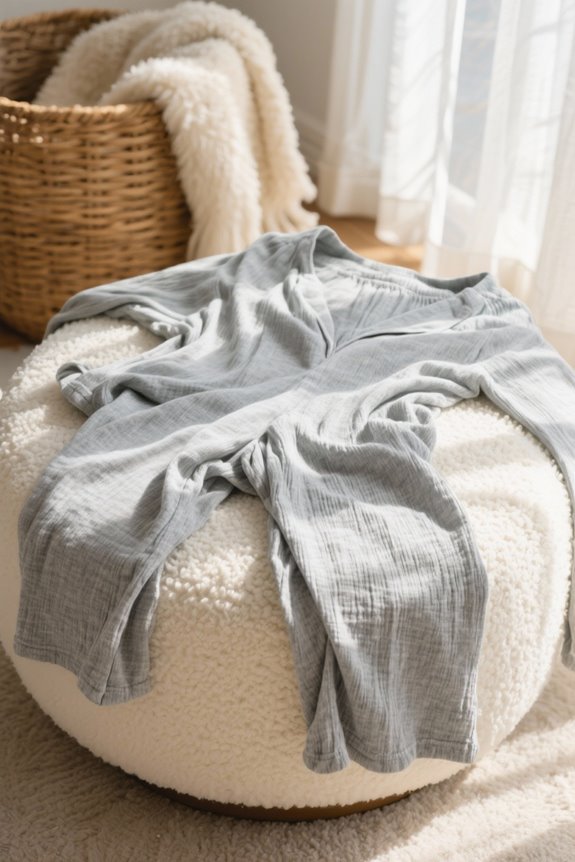
The weight of fabric plays an essential role in determining airflow within loungewear, greatly impacting overall comfort. Fabrics lighter than 150 grams per square meter (GSM) enhance airflow, allowing for better ventilation and moisture evaporation. Breathability research indicates that these low-density fabrics improve temperature regulation, especially in warmer conditions. Conversely, medium-weight fabrics, ranging from 150 to 350 GSM, offer a balance between airflow dynamics and durability, making them suitable for changing weather. Heavier fabrics, exceeding 350 GSM, often restrict airflow due to their thickness, leading to discomfort as they trap moisture. Understanding the relationship between fabric weight and air circulation directly informs the design of breathable loungewear, enhancing comfort and performance in various environments. Additionally, soft, breathable fabrics such as cotton and jersey knit are commonly used in loungewear for their comfort and airflow properties.
Weave Structures That Promote Breathability
Breathability in loungewear is greatly influenced by the weave structures used in fabric production. Different woven textures, such as plain weave, twill, and honeycomb, each promote airflow in distinct ways. Plain weave features a crisscross pattern that allows moderate air passage, providing essential cooling effects. Twill’s diagonal pattern enhances air movement through its channels, optimizing ventilation. Meanwhile, honeycomb weave’s three-dimensional surface creates air pockets, further enhancing circulation. Open weave structures like eyelet and gauze offer significant airflow due to their deliberate gaps, maximizing breathability and moisture evaporation. Each of these weaves is designed to balance comfort and functionality, ensuring loungewear remains breathable while meeting the demands of everyday leisure activities. Additionally, fabrics made from sustainable materials like bamboo and organic cotton inherently possess moisture-wicking properties, further enhancing overall comfort in loungewear.
The Impact of Fabric Blends and Stretch
As fabric blends increasingly gain popularity in loungewear, their impact on comfort and functionality becomes evident. Blends like cotton-modal or bamboo-spandex enhance stretchability and durability, allowing garments to adapt to body movements while retaining shape. For instance, cotton-linen blends merge cotton’s softness with linen’s durability, improving overall wearability. Modal fibers enhance moisture-wicking capabilities, essential for breathability. Additionally, including spandex in cotton blends improves fabric recovery, facilitating freedom of movement. Lightweight stretch knits, featuring balanced ratios of natural and synthetic fibers, foster breathability and elasticity. The combination of these fabric characteristics results in excellent blend performance, catering to various lounging activities while ensuring comfort and resilience throughout daily wear. This scientific approach to fabric selection enhances the loungewear experience. Moreover, materials like 95% polyester and 5% elastane not only provide softness but also contribute to the overall stylish appeal of loungewear.
Comfort Considerations for Sensitive Skin
Sensitive skin presents unique challenges that demand specific considerations in loungewear selection. Fabrics such as organic cotton, silk, and bamboo are ideal, as they are soft, breathable, and hypoallergenic. These materials markedly reduce sensitivity symptoms and skin reactions by minimizing friction and moisture retention. For instance, silk’s smooth texture helps lock in skin moisture, while bamboo’s moisture-wicking properties regulate temperature. Additionally, breathable fibers prevent sweating, which can aggravate skin conditions like eczema and rosacea. Choosing garments made from certified organic material enhances safety by eliminating harmful chemicals. Soft textiles, combined with gentle care, such as fragrance-free detergents, promote maximum comfort, supporting the skin’s barrier function and fostering a positive wearing experience for those with sensitive skin. Furthermore, bamboo loungewear not only offers comfort but also features natural moisture-wicking attributes to keep wearers cool and dry.
Sustainable and Eco-friendly Fabric Choices
In the domain of loungewear, sustainable and eco-friendly fabric choices play an essential role in promoting responsible consumption. Fabrics like organic cotton and bamboo excel in breathability and moisture-wicking properties, making them ideal for comfortable loungewear. Organic cotton, cultivated without synthetic pesticides, reduces soil degradation, while bamboo is hypoallergenic and gentle on the skin. TENCEL™ Lyocell, produced via a closed-loop process, dramatically minimizes chemical waste by over 90%. Hemp fibers are durable and require less water, further enhancing sustainability. Many sustainable brands incorporate recycled fibers to decrease landfill contributions while balancing breathability and durability. By prioritizing eco-friendly practices, these fabrics extend garment lifecycles, support ethical labor, and align with increasing consumer demand for environmentally responsible choices. Additionally, breathable fabrics can significantly improve air quality control, enhancing overall comfort during wear.
Innovations in Lightweight Loungewear Fabrics
Lightweight loungewear fabrics have seen significant innovations aimed at boosting comfort and functionality. Modern fabric technologies incorporate innovative fibers, such as modal, known for its ultra-soft, breathable texture comparable to silk. Bamboo terry excels in moisture-wicking and antibacterial properties, catering to warm climates. Jersey fabric and lightweight knits provide year-round comfort, while cloud knits guarantee a cozy experience. Remarkably, advancements such as four-way stretch allow unrestricted movement, adapting loungewear for active use. Quick-dry technology simplifies care, enhancing usability. Additionally, integrated UV protection offers added comfort outdoors. These developments not only improve the overall comfort of loungewear but also expand its versatility, effectively blurring the lines between casual and active wear in today’s fashion landscape. Additionally, the use of high-quality materials contributes to the durability and longevity of loungewear, ensuring that these garments maintain their appearance and comfort over time.
How Breathable Loungewear Enhances Relaxation
Breathable loungewear considerably contributes to relaxation through its ability to regulate temperature and enhance skin comfort. Natural fibers, such as cotton and bamboo, wick moisture away, keeping the skin dry and cool while allowing for ideal airflow. This prevents overheating, a factor essential for maintaining sleep hygiene and uninterrupted rest. Additionally, loose-fitting designs offer freedom of movement, reducing discomfort and friction against the skin. Wearing designated loungewear supports relaxation rituals by signaling a change from daytime responsibilities to evening tranquility, consequently lowering cortisol levels. Hypoallergenic and OEKO-TEX certified materials minimize skin irritation, promoting physical comfort. Taken together, these factors create an environment that enhances the overall relaxation experience, paving the way for deeper, restorative sleep.
Frequently Asked Questions
How Should I Care for Breathable Loungewear Fabrics?
Breathable loungewear fabrics require careful maintenance; wash using cold water on gentle cycles, and air dry flat. Avoid harsh detergents and direct sunlight to preserve fabric integrity, ensuring comfort and longevity for repeated wear.
Can Breathable Loungewear Be Stylish for Public Outings?
Breathable loungewear can indeed be stylish for public outings, particularly through emerging loungewear trends. Fabric choices like cotton and bamboo allow for fashion-forward designs, blending comfort with contemporary aesthetics suitable for casual environments.
What Seasons Are Best for Wearing Breathable Loungewear?
Spring and summer are preferred seasons for breathable loungewear, allowing fabric choices like cotton and bamboo viscose to excel in warmth. Meanwhile, layering options make it adaptable for comfort during changing weather throughout the year.
How Can I Tell if a Fabric Is Breathable?
Like a gentle breeze on a hot day, breathable fabrics invite airflow through their unique characteristics. Observing fabric types and testing airflow can reveal essential insights into breathability, ensuring comfort in diverse conditions.
Are Synthetic Fabrics Ever Breathable?
Yes, synthetic fabrics can be breathable, particularly when designed with moisture management properties. Certain polyesters and nylons exhibit high moisture vapor transmission rates, effectively allowing sweat to evaporate and enhancing comfort during active wear.